



You’re cruising smoothly on the highway. Everything feels fine until you hit the brakes. Suddenly, the steering wheel starts vibrating. The car jerks, and your confidence disappears faster than your speed.
If your car shakes when braking at high speeds, don’t ignore it. This is not a minor annoyance. It’s your vehicle telling you something is seriously wrong.
In this guide, we’ll break down exactly why vehicles shake during braking, what components are usually responsible, how serious the issue can become, and when professional inspection becomes non-negotiable.
Why Does a Car Shake Only When Braking at High Speeds?
Here’s the key detail many drivers miss: If the vibration occurs only while braking, the problem is almost always related to the braking system or components subject to braking forces.
At higher speeds, braking generates massive heat and pressure. Small imperfections that go unnoticed at city speeds become obvious when slowing down from 60-75 mph. This is why highway braking exposes issues first.
What Actually Causes Car Brake Shaking? Key Components to Check
Warped Brake Rotors
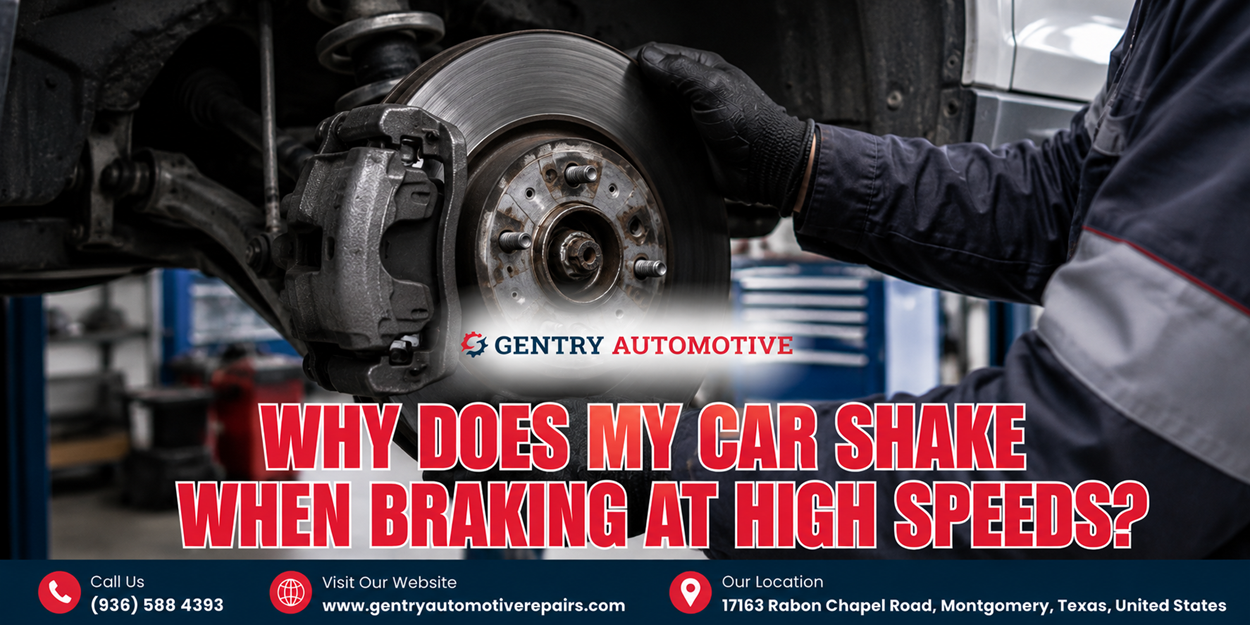
Let’s start with the most common cause behind brake vibration. Your brake rotors are large metal discs squeezed by brake pads to slow your vehicle. Ideally, they should remain perfectly flat. But reality says otherwise.
Heavy braking creates intense heat. Rotors expand and contract repeatedly. Over time, they develop uneven thickness or slight warping.
When this happens, the brake pads grab unevenly as they rotate, creating the shake you feel. You’ll notice:
- Steering wheel vibration while braking
- Pulsation in the brake pedal
- Shaking worsens at higher speeds
- Smooth driving when not braking
Overheated Brakes
Texas drivers often face long highways, traffic slowdowns, and sudden braking. These are the perfect conditions for overheated brakes.
Common overheating situations include riding the brakes downhill and other aggressive driving habits. Once overheated, rotors develop hard spots that grab inconsistently. And once that happens? The shaking usually gets worse over time.
Worn or Uneven Brake Pads
Brake pads don’t always wear evenly. If one pad wears faster than another, the braking force becomes uneven across the rotor surface. This results in pulsation, steering vibration, and reduced stopping confidence.
Cheap pads are a frequent culprit. They break down faster under heat and leave uneven deposits on rotors. This is one of the underestimated causes of brake vibration that many drivers overlook.
Loose or Worn Suspension Components
Sometimes the brakes aren’t the real problem. They’re just revealing another issue. Braking shifts the vehicle’s weight forward. That sudden load exposes weaknesses in suspension parts, like control arms, ball joints, tie rods, wheel bearings, and bushings.
Drivers frequently report online that shaking began after suspension work or alignment issues, showing how braking forces amplify existing instability. If your car recently had suspension repairs but no alignment afterward, vibration during braking is extremely common.
Wheel Alignment Problems
Misalignment rarely causes shaking alone, but when combined with braking, the symptoms show up quickly. When wheels aren’t aligned, tires pull unevenly, and the vehicle wobbles under deceleration. You might notice:
- Steering wheel jerking while braking
- Uneven tire wear
- Vehicle pulling left or right
Alignment issues often develop slowly, which is why many drivers are surprised when braking vibration suddenly appears.
Tire Problems That Mimic Brake Issues
Not every braking vibration comes from the brakes. Sometimes tires are the real villain. Possible tire-related causes:
- Unbalanced wheels
- Tire flat spots
- Internal tire separation
- Uneven tread wear
Here’s the trick to understand: If shaking happens only when braking, the brakes are the culprit. But if shaking happens while driving, too, tires or wheels are likely involved.
Sticking Brake Calipers
Brake calipers press pads against the rotors. When they fail to release properly, one wheel keeps braking slightly even after you release the pedal. This creates excess heat, rotor damage, and severe vibration.
Many drivers mistake this for simple rotor wear when the actual issue is hydraulic. Ignoring this can lead to complete brake failure.
Improper Wheel Installation
After tire or brake service, incorrect lug nut tightening can cause shaking. If lug nuts are unevenly torqued, over-tightened, or installed improperly, the rotor may sit unevenly against the hub. That tiny misalignment becomes very noticeable during high-speed braking. This issue appears surprisingly often after routine tire rotations.
Why High-Speed Braking Makes the Problem Worse?
A little physics is involved in this. Higher speeds mean:
- More rotational energy
- More heat
- Greater weight transfer
- Higher brake pressure
A tiny rotor imperfection at 30 mph becomes a violent vibration at 70 mph. That’s why drivers suddenly notice problems during highway exits or emergency braking.
Is It Safe to Keep Driving?
No, not for long. A shaking car isn’t just uncomfortable. It’s a warning sign that braking performance is compromised. Risks include:
- Increased stopping distance
- Loss of steering control
- Premature suspension damage
- Brake system failure
The vibration rarely fixes itself. It almost always worsens.
Common Driver Mistakes That Make Brake Vibrations Worse
Let’s be honest, many car owners unintentionally make the issue worse by doing the following:
- Waiting Too Long: Small vibrations turn into expensive repairs quickly.
- Replacing Pads Without Rotors: New pads on damaged rotors often bring the vibration back within weeks.
- Choosing the Cheapest Parts: Low-quality brake components overheat faster and fail sooner.
- Ignoring Suspension Checks: Fixing brakes without inspecting suspension often means the shake returns.
When Should You Schedule Brake Repair in Montgomery, TX?
You should seek professional inspection immediately if:
- The steering wheel shakes while braking
- Brake pedal pulses
- Vehicle vibrates during highway stops
- Braking feels inconsistent
Drivers searching for brake repair in Montgomery, TX, or reliable auto repair services often arrive after months of ignoring early warning signs, and by then, repair costs are higher than necessary. Early action saves money and improves safety.
Final Thoughts
Brake vibration almost always points to rotor issues, uneven braking forces, or suspension instability. The longer it’s ignored, the more components become involved.
The good news is that these problems are highly fixable when diagnosed early by experienced technicians who understand how braking, suspension, and alignment systems work together.
If you’re experiencing a similar situation and want a trusted inspection without guesswork, the team at Gentry Automotive Repairs provides professional diagnostics and repairs designed to restore smooth, confident braking for drivers throughout Montgomery and surrounding Texas communities.
Book your brake inspection today and stop small vibrations before they turn into major repairs.
Frequently Asked Questions
1. Why does my car shake when braking at high speeds?
A car may shake when braking at high speeds because of warped or uneven brake rotors, worn brake pads, sticking calipers, or loose suspension parts. Tire and wheel problems can also cause similar vibrations. If the shaking happens mainly when you press the brake pedal, it’s a good idea to have the brake system inspected before the problem gets worse.
2. Is it safe to drive a car that shakes when braking?
It’s not recommended to keep driving a car that shakes during braking, especially at highway speeds. Brake vibration can be a sign of rotor, pad, caliper, suspension, or wheel problems. Continuing to drive may increase stopping distance and make the repair more expensive.
3. Can bad brake rotors cause steering wheel vibration?
Yes. Uneven or damaged brake rotors are one of the most common reasons for steering wheel vibration during braking. The vibration is often more noticeable when braking from higher speeds because the brakes produce more heat and pressure.
4. How much does it cost to fix a car that shakes when braking?
The cost depends on the cause of the vibration. A simple brake inspection may reveal worn brake pads, while damaged rotors, calipers, suspension components, tires, or wheel alignment may require additional repairs. A professional inspection is the best way to find the exact cause and avoid replacing parts that are still in good condition.
5. Where can I get brake repair for a car that shakes when braking?
If you’re looking for brake repair in Montgomery, TX, Gentry Automotive Repairs can inspect your vehicle and identify the cause of the shaking. If your car is vibrating when you brake, contact us to schedule an inspection and get the problem checked before it becomes a bigger safety issue.