



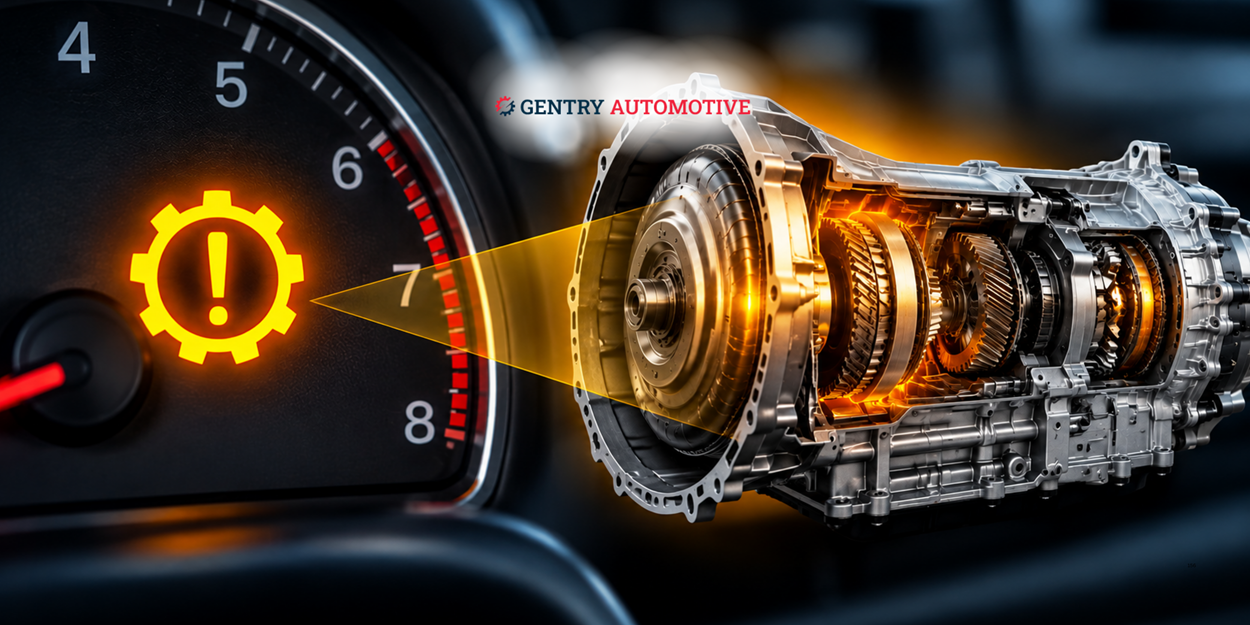
A flashing check engine light is more urgent than a check engine light that stays on steadily. In many vehicles, a flashing light indicates an active or severe engine misfire that can send unburned fuel into the exhaust and overheat or damage the catalytic converter.
If the light starts flashing while you are driving, do not assume it will go away on its own. Reduce your speed, avoid hard acceleration, and find a safe place to stop. If the engine runs very rough, loses power, shakes, produces unusual smoke, or makes abnormal noises, it is safer to shut it off and arrange a tow rather than keep driving. Let’s get into it in more detail.
What Does a Flashing Check Engine Light Mean?
The check engine light is part of your vehicle’s onboard diagnostic system. When the engine computer detects a problem, it stores diagnostic trouble codes that can help a technician identify which system needs attention.
A flashing light generally means the problem is happening actively enough that continued driving could cause additional damage. An engine misfire is one of the most common reasons.
A misfire happens when one or more cylinders fail to burn the air-fuel mixture correctly. You may notice:
- Shaking or vibration at idle
- Rough acceleration
- Loss of engine power
- Hesitation when pressing the gas pedal
- Poor fuel economy
- A noticeable change in engine sound
- Strong fuel smell from the exhaust
The important point is that you do not always feel every misfire. A vehicle can sometimes feel relatively normal even when the computer detects a serious intermittent misfire.
Should I Keep Driving With a Flashing Check Engine Light?
Generally, no. A flashing light is not something to ignore until your next routine service.
If the light begins flashing while you are on the road, safely reduce your speed and avoid putting the engine under heavy load. Do not repeatedly accelerate hard to see whether the light stops flashing.
If the vehicle is running smoothly and the flashing stops quickly, that does not necessarily mean the problem has disappeared. A temporary misfire can still leave diagnostic information stored in the vehicle’s computer.
If the light continues flashing, the engine is shaking badly, or you notice significant power loss, pull over somewhere safe and have the vehicle inspected or towed.
Why Can a Check Engine Light Flash?
A misfire can have several different causes, which is why replacing a part based only on the warning light is not always the right approach.
Worn or Damaged Spark Plugs
Spark plugs create the spark needed to ignite the air-fuel mixture. When a plug is worn, fouled, damaged, or incorrectly gapped, it may fail to ignite the mixture consistently.
This is a relatively common cause of misfires, particularly when spark plugs are overdue for replacement.
A Failing Ignition Coil
Modern vehicles commonly use individual ignition coils to provide the high voltage required by each spark plug. A weak or failed coil can cause one cylinder to misfire.
A technician may use diagnostic testing to determine whether the misfire follows a particular coil or whether another problem is responsible.
Fuel Delivery Problems
An engine needs the correct amount of fuel to run properly. A clogged or malfunctioning fuel injector, inadequate fuel pressure, or another fuel-system problem can cause a cylinder to misfire. Simply replacing spark plugs will not solve a fuel-delivery problem.
Vacuum or Intake Leaks
Unmetered air entering the engine can disrupt the air-fuel mixture. Depending on the location and severity of the leak, this can lead to rough running, hesitation, or misfires.
Mechanical Engine Problems
Low compression, valve problems, damaged piston rings, incorrect valve timing, or other internal engine issues can also cause a cylinder to misfire. This is why proper diagnosis matters before approving major repairs.
Problems with the Catalytic Converter
A damaged or restricted catalytic converter can contribute to drivability problems and may exist alongside misfire-related faults. Conversely, repeated misfires can damage the catalytic converter because unburned fuel can enter the exhaust and create excessive heat.
That is one reason ignoring a flashing warning can turn a relatively manageable engine problem into a more expensive repair.
What Should I Do If My Check Engine Light Starts Flashing?
If your check engine light starts flashing, follow these steps:
- Stay Calm and Reduce Speed: Avoid aggressive acceleration, high engine speeds, towing, or other situations that put additional load on the engine.
- Pay Attention to How the Vehicle is Behaving: Notice whether the engine is shaking, sputtering, losing power, overheating, or producing unusual smells or smoke.
- Pull Over if the Problem is Severe: Choose a safe location away from traffic. If the vehicle is running extremely rough or losing significant power, turn the engine off.
- Do not keep restarting the vehicle: The warning symbol going away does not prove that the underlying problem has been fixed.
- Get the Vehicle Properly Diagnosed: A scan tool can retrieve diagnostic trouble codes and other information from the engine computer. Those codes provide an important starting point, but a code is not automatically a diagnosis.
What Happens During a Proper Diagnosis?
A technician may inspect the ignition system, spark plugs, coils, fuel delivery, intake system, wiring, sensors, and engine operation. Depending on the symptoms and test results, additional checks such as compression or other mechanical testing may be necessary. This approach helps separate the actual cause from symptoms created by the original fault.
If you are looking for an engine diagnostic service near Montgomery, getting the problem checked promptly is particularly important when the warning is flashing rather than remaining steadily illuminated.
Flashing vs. Solid Check Engine Light
The two warnings should not be treated the same.
- Solid Check Engine Light: This can indicate anything from an emissions-related fault to a more significant engine or drivetrain problem. It should be diagnosed, but the vehicle may remain drivable depending on the symptoms.
- Flashing Check Engine Light: This generally signals a more urgent condition, commonly an active misfire. Continuing to drive can increase the risk of damage, particularly to the catalytic converter.
The vehicle’s owner’s manual should always be checked for manufacturer-specific instructions because warning-light behavior can vary between vehicles.
Wrapping Up
A flashing check engine light is your vehicle’s way of telling you that something needs immediate attention. It does not tell you exactly which part has failed, so guessing and replacing parts can waste money while the underlying problem continues.
If the light is flashing, prioritize safety, avoid unnecessary driving, and have the vehicle diagnosed as soon as possible. For drivers needing engine light repair in Montgomery, TX, Gentry Automotive Repairs can help diagnose the underlying problem and determine the appropriate repair rather than simply clearing the warning light.