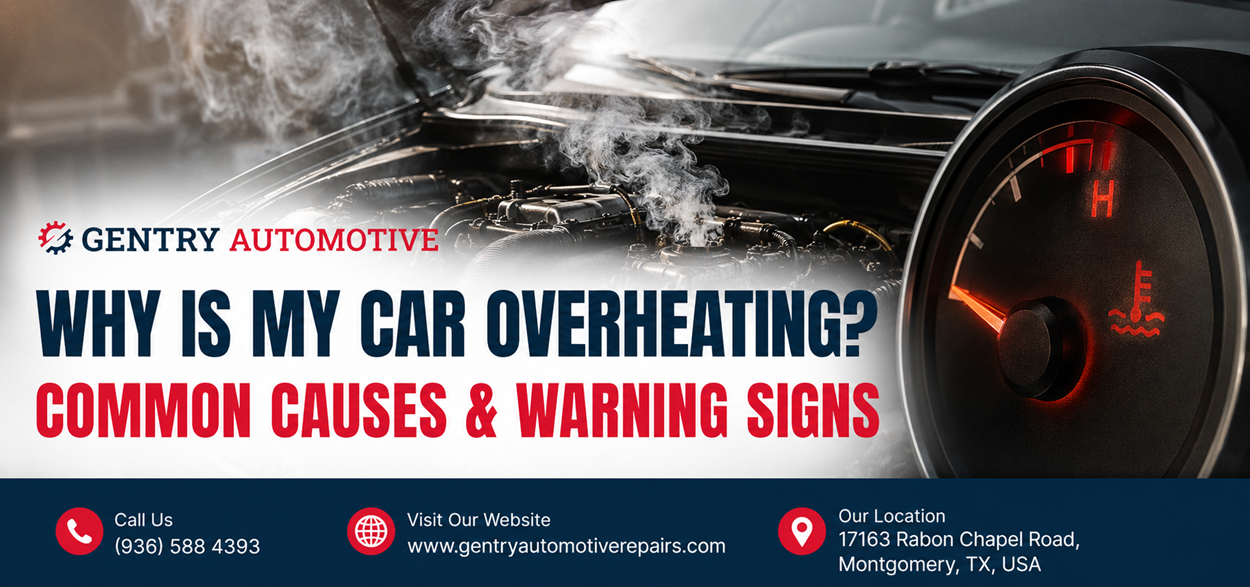


The engine temperature warning light indicates that your vehicle’s engine is running hotter than it should. It’s a clear signal that something in the cooling system isn’t functioning properly.
Driving with this warning light on is not recommended. This article explains what the warning light means, common car overheating causes, and what steps to take if the light appears. Let’s get started.
Common Car Overheating Causes You Should Know
Several root issues usually trigger the warning. Knowing them gives you an idea of how serious this is.
- Low or Leaking Coolant: Without enough coolant, heat sinks into the engine block instead of being carried away.
- Cooling Fan Failure: At idle or in slow traffic, your engine relies on fans. If they don’t kick in, your car overheats fast.
- Stuck Thermostat, Bad Water Pump, or Clogged Radiator: These disrupt coolant circulation and are among the top car overheating causes.
- Heavy Load, Traffic, or Extreme Weather: All of these increase stress on your engine’s cooling system.
In short, there’s always a reason your car is running hot, and ignoring it is a huge mistake.
How Hot Does an Engine Get Before It’s Too Late?
Engines are designed to operate in a specific temperature window. When things go out of hand, damage happens quickly.
If your gauge is pegged in the red or the warning light is on, your coolant temperature is likely above 100 °C (212 °F) or possibly much higher. At those temperatures, even a few minutes can warp metal, destroy gaskets, or seize your engine.
In short, if the warning light is on, the engine has already reached an unsafe operating temperature and should be shut down as soon as possible.
What Causes a Car to Run Hot and How to Respond
When the temperature warning light comes on, driving on is not recommended. Here’s what to do instead:
- Pull over safely as soon as possible. Turn off the engine and open the bonnet to help it cool.
- Do not keep driving, no matter how close you are to home.
- Check coolant levels once the engine is cool.
- Never open the radiator cap when hot. Steam and pressure can cause burns.
- Schedule a professional inspection to identify what causes your car to run hot and prevent future overheating.
If you must drive a short distance to safety, turn off the AC and switch the heater on full blast. It helps draw heat away temporarily, but it’s only a quick fix to prevent major damage while reaching help.
Car Overheating Repair: What Happens Next
Once you’ve stopped driving and let the engine cool, the next step is car overheating repair. Depending on the cause, your mechanic may:
- Replace or refill the coolant
- Repair leaks and bleed the system
- Replace a faulty thermostat, radiator, or water pump
- Inspect for head gasket or engine damage
Many drivers ignore the first warning light and end up paying thousands in repairs later. Don’t be one of them.
Final Thoughts
If the warning light in your car comes on, get professional help immediately. Don’t assume it’ll “cool down on its own.” The risk of ignoring it is a blown engine, a huge repair bill, and maybe a tow truck rescue. Car overheating causes can vary, but the damage that follows is always serious. So, the moment you see that red light: pull over, cool down, and get it repaired.
FAQs
Is it safe to drive when the engine temperature warning light comes on?
No, it is not safe to drive when the engine temperature warning light is on. It means your engine is overheating and can suffer serious damage within minutes. At Gentry Automotive, drivers are advised to pull over immediately and turn off the engine to prevent costly repairs.
What should I do if my engine temperature warning light turns on while driving?
Pull over safely, turn off the engine, and let it cool down completely. Do not open the radiator cap while hot. After cooling, check coolant levels. For proper diagnosis and repair, Gentry Automotive can inspect the cooling system and fix the root cause.
What causes a car to overheat while driving?
Common causes include low coolant levels, leaks, a faulty thermostat, a broken water pump, cooling fan failure, or a clogged radiator. External factors like heavy traffic or hot weather can also contribute. Identifying the exact cause early helps prevent major engine damage.
Can low coolant cause the engine temperature light to come on?
Yes, low or leaking coolant is one of the most common reasons for the warning light. Coolant regulates engine temperature, and without enough of it, heat builds up quickly. This can cause the engine to overheat and trigger the temperature warning light.
How can I prevent my car from overheating in the future?
Regular maintenance is key. Check coolant levels, inspect hoses for leaks, service the radiator, and ensure the cooling fan and thermostat are working properly. Routine inspections help catch issues early and keep your engine running within a safe temperature range.