



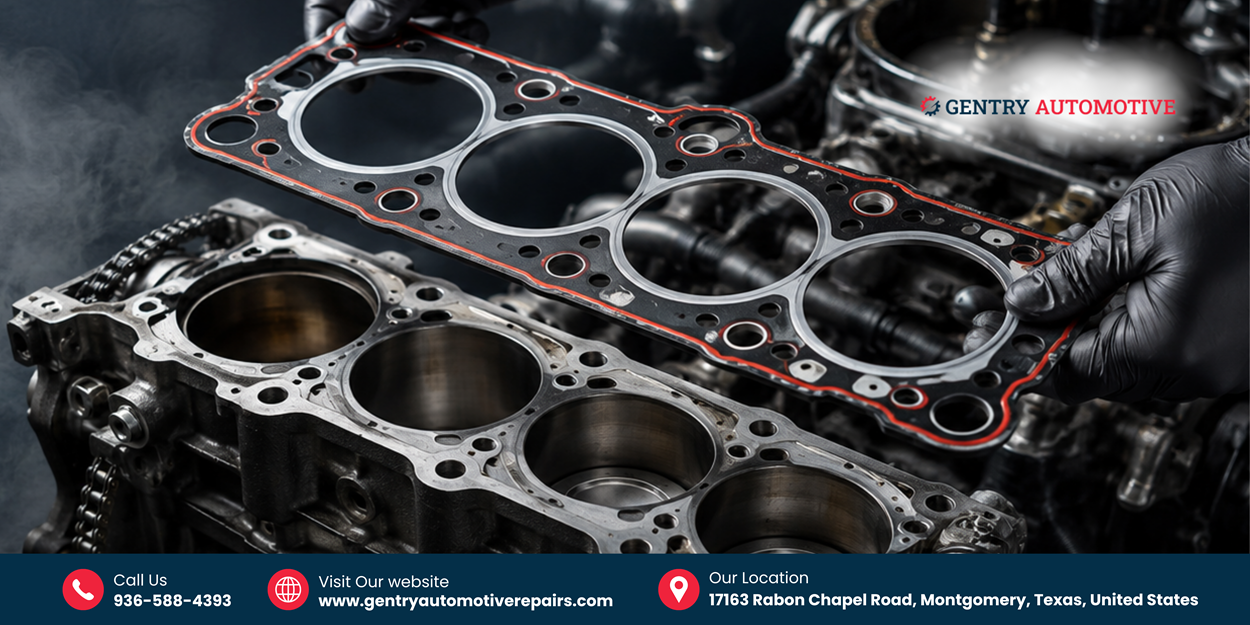
A head gasket seals the engine’s cylinders while keeping coolant, oil, and combustion gases in their proper passages. When it fails, those fluids and gases can cross paths, potentially causing overheating, misfires, or serious engine damage. The tricky part is that head gasket problems can look like other cooling or engine issues, so one symptom alone does not prove the gasket is bad.
5 Signs Your Car Has a Head Gasket Problem
1. Your Engine Keeps Overheating
Repeated overheating is one of the biggest warning signs. A failed head gasket can allow combustion gases into the cooling system, increasing pressure and reducing the system’s ability to manage engine temperature.
However, overheating does not automatically mean a bad head gasket. A faulty thermostat, radiator, water pump, cooling fan, or coolant leak can cause the same problem. That is why proper diagnosis matters.
2. White Smoke Keeps Coming From the Exhaust
A small amount of white vapor during a cold start can simply be condensation. Persistent, thick white smoke after the engine warms up is different. It may mean coolant is entering a cylinder and burning with the air-fuel mixture. A sweet-smelling exhaust can make this warning more concerning.
3. The Coolant Level Keeps Dropping
If you regularly need to add coolant but cannot find an external leak, coolant could be escaping internally through the engine. A head gasket is one possible cause.
Do not assume every unexplained coolant loss means head gasket repair is needed. Technicians should first check hoses, the radiator, water pump, heater system, and other possible leak points.
4. The Engine Runs Rough or Misfires
A damaged gasket can allow coolant into a cylinder or let compression escape between cylinders. This can cause rough idling, misfires, poor acceleration, or noticeable power loss.
A check engine light may also appear, but its presence alone does not identify a head gasket problem.
5. Oil Looks Milky or Creamy
Coolant mixing with engine oil can create a light-colored, creamy sludge. Finding substantial contamination is a serious warning because coolant can reduce the oil’s ability to protect internal engine components.
That said, a little creamy residue under the oil cap is not definitive. Short trips and condensation can sometimes create similar deposits.
How is a Head Gasket Problem Confirmed?
A professional diagnosis may include a cooling-system pressure test, combustion-gas test, compression test, or leak-down test. These tests help determine whether combustion pressure or coolant is crossing where it should not.
If the gasket has failed, head gasket replacement may be necessary. Depending on the cause, you may also need additional engine repairs, especially if overheating has damaged or warped engine components.
If your vehicle is overheating, losing coolant, or producing persistent white exhaust, avoid continuing to drive it. Getting it inspected early can help prevent a gasket failure from turning into much more expensive engine damage.
If you’re seeing these warning signs in Montgomery, Texas, Gentry Automotive Repairs can help diagnose the underlying problem and determine the right repair.
FAQs
1. What are the most common signs of a blown head gasket?
Common signs include repeated engine overheating, persistent white smoke from the exhaust, unexplained coolant loss, engine misfires or rough running, and milky or creamy-looking engine oil. However, these symptoms can also be caused by other engine or cooling-system problems, so professional diagnosis is important.
2. Can a bad head gasket cause a car to overheat?
Yes. A damaged head gasket can allow combustion gases into the cooling system, increasing pressure and reducing the cooling system’s ability to regulate engine temperature. However, problems with the thermostat, radiator, water pump, cooling fan, or coolant system can also cause overheating.
3. Can a blown head gasket cause coolant loss?
Yes. A failed head gasket can allow coolant to leak internally into the engine or combustion chambers. If your coolant level keeps dropping without an obvious external leak, a head gasket problem is one possible cause and should be checked by a technician.
4. Can I drive with a blown head gasket?
It is generally best to avoid driving with a suspected blown head gasket. Continued driving can cause severe overheating and potentially lead to warped or damaged engine components. Having the vehicle inspected as soon as possible can help prevent more extensive and expensive engine damage.
5. How is a blown head gasket diagnosed?
A technician may use a cooling-system pressure test, combustion-gas test, compression test, or leak-down test to identify a head gasket failure. These tests help determine whether coolant, combustion gases, or compression are crossing between areas that should remain sealed.