




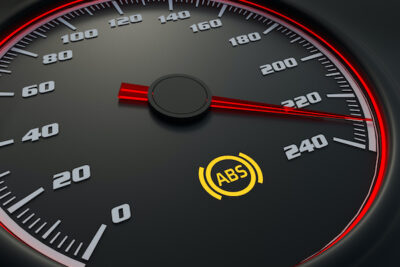
That little amber ABS Light on your dashboard can feel like a threat. Sometimes it’s nothing, and sometimes it’s the start of an expensive problem. Why? Because this system is what keeps your car steady when you slam the brakes. And when this system fails, it’s an actual safety problem.
The tricky part, however, is that the turning on of the ABS car light can range from a dirty wheel sensor to a failing module. So, before you start guessing “how to reset ABS car light”, this guide breaks it all down for you. We will talk about everything, like what causes the ABS light to be on in your car, how to fix it, and when to call a professional.
What Does the ABS Light Mean on Your Car?
The ABS (Anti-Lock Braking System) light indicates that the vehicle’s anti-lock system has detected a fault. Your normal brakes will probably still work, but the ABS, which is the system that prevents wheel lock-up and helps maintain steering control in heavy braking, is disabled until the fault is fixed.
There is no immediate need to panic, but you can not ignore this problem either. But one thing you should know is that driving with the ABS disabled increases risk in slippery conditions or emergencies.
Common Reasons Why the ABS Light in Your Car Turns On
Here’s the short list, the parts and problems that most often trigger the ABS Car Light is On:
- Faulty Wheel Speed (ABS) Sensor: This is the most common reason. Dirt, corrosion, or a broken sensor wire can send wrong or no speed data.
- Damaged Tone Ring or Dirty Sensor Pickup: The tone ring works with the sensor to measure wheel rotation. If the sensor can’t read the tone ring, the ABS thinks a wheel is faulty.
- Low Brake or Contaminated Fluid: If your fluid is low, dirty, or old, it can trigger the warning light.
- Blown Fuse or Relay: If one fuse blows, the system loses power, and the light comes on. It is an easy and inexpensive fix if this is the cause.
- Malfunctioning ABS Control Module: This is the brain of the ABS system. If the module develops a software issue, it can’t control braking pressure correctly.
- Wheel Bearing or Hub Issues: If your wheel bearings wear out, they can mess with the sensor’s ability to read the wheel’s speed accurately.
Step-by-Step Guide: How to Troubleshoot and Fix the ABS Light
1. Look for Obvious Signs
Make sure it is the ABS light that is on and not any other light. Keep note of any change in brake feel or noises. If the brakes are spongy or you hear grinding, stop driving and get to the nearest auto repair shop.
2. Check Brake Fluid Level and Reservoir Condition
Low fluid can trigger ABS and brake lights. Top up only with the correct DOT fluid and inspect for leaks. If fluid is low because of a leak or worn pads, topping up is a temporary band-aid.
3. Check Fuses and Connectors
Locate the ABS fuse in the fuse box and inspect it. Replace blown fuses and check connectors for corrosion. This is the cheapest solution to this problem.
4. Scan for ABS Codes with the Right Tool
You need an ABS-capable scanner. Generic OBD-II readers often won’t read ABS modules. Plug in, read codes, write them down. Codes point to a wheel sensor, module comms error, pump fault, etc. If you are still confused, it is always better to go to a professional.
5. Inspect Wheel Speed Sensors & Tone Rings
Lift the wheel, visually inspect the sensor wiring, clean the sensor, and tone ring. If the tone ring is damaged or full of rust and debris, it can cause false faults. Often, one bad sensor triggers the light for the whole system.
6. Replace the Faulty Sensor
Many sensors are inexpensive and quick to replace if accessible. DIY is possible for many models, so you can easily do that.
DIY vs Professional Car ABS Repair: When to Call Auto Repair In Montgomery
You can choose to DIY if:
- You’re comfortable jacking up a car and removing a wheel.
- The issue is a visible connector, blown fuse, low fluid, or a clearly damaged wheel speed sensor.
- You have an ABS-capable code reader or access to one.
Call a professional if:
- Codes point to the ABS control module, pump, or complicated wiring harness issues.
- You don’t have the right diagnostic tools.
When in doubt, take it to a reputable local shop. If you’re in Montgomery, search for auto repair shops with ABS diagnostics, but don’t let price alone be the deciding factor. Ask if they use an ABS-capable scanner and whether they offer a diagnostic before charging for parts.
Common ABS Light Fixing Mistakes to Avoid
- Replacing random parts without checking the problem first. Don’t just swap sensors or parts, hoping the light will disappear. Always read the error code first.
- Guessing the issue will only waste money. A quick scan can point you to the exact sensor or system at fault.
- Not every scanner can read ABS codes. Cheap ones only check engine issues. Use or borrow a proper ABS-capable scanner for accurate results.
- Many local or independent mechanics (and even mobile repair experts) can handle ABS problems at a lower cost. You only need the dealership if the part replacement requires special programming tools.
Is it Safe to Drive With the ABS Light On?
If normal braking feels fine and no other warning lights are lit, you can drive carefully to a shop, but the ABS feature is disabled. That means under hard braking or on slick surfaces, your wheels may lock, increasing stopping distances and reducing steering control. If you often drive in rain, snow, or heavy traffic, don’t risk it. Get it checked as soon as possible.
Wrapping Up
The ABS light is more than a warning light. It is your car telling you that your safety could be at risk. Whether it’s a simple sensor issue or a failing module, do not ignore it. Check the basics, fix what you can, and if things get out of hand, take your vehicle to a trusted auto repair shop for professional car ABS repair. Because a quick fix today can save you from a dangerous brake failure tomorrow.
FAQ
Why is my ABS light on in my car?
Your ABS light usually turns on due to issues like a faulty wheel speed sensor, low brake fluid, damaged wiring, or a failing ABS module. At Gentry Automotive, technicians use advanced diagnostic tools to quickly identify the exact cause and prevent further braking system risks. Contact us now!
How do I fix the ABS light on my car?
Start by checking brake fluid levels, inspecting fuses, and scanning for ABS trouble codes using a proper scanner. Cleaning or replacing faulty sensors often resolves the issue. For accurate diagnosis and repair, Gentry Automotive can handle complex ABS problems professionally. Call now at (936) 588 4393.
Is it safe to drive with the ABS light on?
Yes, but with caution. Your regular brakes will still work, but the anti-lock braking system is disabled. This increases the risk of wheel lock-up during sudden braking, especially on wet or slippery roads, so it’s best to get it checked as soon as possible.
What are the most common causes of the ABS warning light?
The most common causes include faulty wheel speed sensors, damaged tone rings, low or contaminated brake fluid, blown fuses, and ABS module failure. These components affect how the system monitors wheel speed and braking, triggering the warning light when something goes wrong.
Can I reset the ABS light without fixing the problem?
You can reset the ABS light using a scanner, but it will come back if the underlying issue is not fixed. The system continuously monitors faults, so clearing codes without repair is only a temporary solution and not recommended for long-term safety.
When should I take my car to a mechanic for an ABS light?
You should visit a mechanic if the ABS light stays on after basic checks, or if you notice braking issues like vibrations or unusual noises. Professional diagnostics are necessary when the problem involves sensors, wiring, or the ABS control module.