



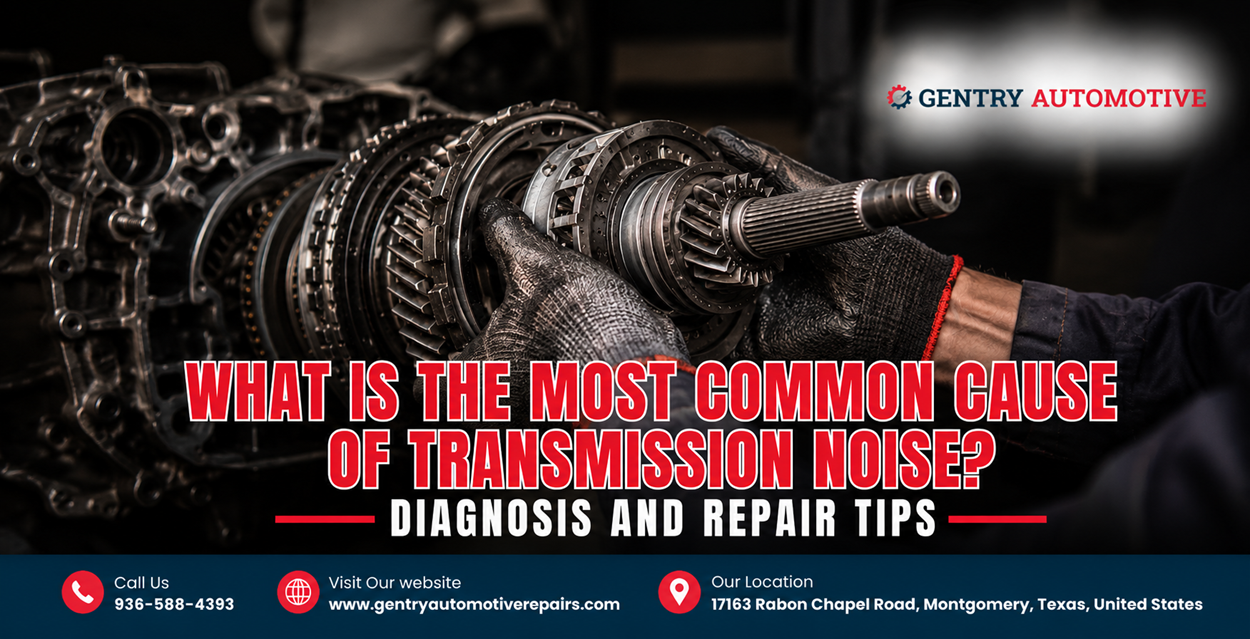
The transmission is the most complex mechanical component in your vehicle. While the engine generates power, the transmission directs that power to the wheels with precision. When this system begins to fail, you’ll start hearing unusual noises. For any driver, ignoring these sounds is a gamble that usually ends in an expensive breakdown.
Understanding why these noises occur and addressing them early is the difference between a minor fluid adjustment and a total mechanical overhaul. Let’s get started!
What is the Most Common Cause of Transmission Noise?
If you are looking for a single culprit, the answer is almost always transmission fluid. More specifically, it is either a lack of fluid or the presence of contaminated fluid.
The transmission relies on hydraulic pressure to shift gears and lubrication to keep metal components from grinding against each other. When fluid levels drop due to a leak, the internal pump draws in air. This creates a distinct cavitating sound. Furthermore, as fluid ages, it loses its viscosity and its ability to dissipate heat. It becomes “burnt,” filled with microscopic metal shavings and friction material. This slurry acts more like liquid sandpaper than a lubricant, leading to the premature wear of bearings and gears.
While mechanical failures like a worn torque converter or a failing planetary gear set are possible, a fluid-related issue is the root cause in the vast majority of cases seen at professional repair facilities.
What Causes Transmission Noise?
Transmission noise can be caused by low or contaminated transmission fluid, worn bearings, damaged gears, torque converter problems, failing pumps, or other internal transmission components. The type of noise and when it occurs can provide useful clues about the underlying problem.
Because similar sounds can also come from wheel bearings, CV joints,
What Does a Bad Transmission Sound Like?
A healthy transmission should be virtually silent. If you can hear it working, it is likely failing. Depending on the type of transmission, automatic, manual, or CVT (Continuously Variable Transmission), the sounds coming from under the hood can mean different things:
- Whining: Often described as a high-pitched siren or a power steering pump noise. It usually increases in pitch as you accelerate. In automatics, this often points to a clogged fluid filter or a failing oil pump.
- Clunking or Bumping: This is most common when the vehicle is shifting from one gear to another. If you feel a thud as the car transitions from second to third, or when you shift from Park to Drive, the internal clutches or the valve body are likely struggling to engage.
- Grinding: In a manual transmission, grinding during a gear change usually indicates worn synchronizers. In an automatic, a constant grinding sound indicates total bearing failure or gear damage.
- Humming or Buzzing: This can sound like a distant drone. It is often caused by internal brass bushings wearing down or a failing electronic solenoid that is vibrating under incorrect hydraulic pressure.
How to Identify Transmission Noise?
Diagnosis requires a systematic approach. To effectively identify transmission noise, you must isolate when the sound occurs. Use these three tests to narrow down the source:
- The Neutral Test: If you hear a noise while the car is in Park or Neutral, but it disappears when you put it in Drive, the issue is likely the input shaft bearing or the torque converter.
- The Load Test: If the noise only occurs during acceleration but goes away when you coast, the problem is likely related to the gear sets or the differential.
- The Turning Test: If the noise changes when you turn the steering wheel, you might be misdiagnosing a wheel bearing or a CV joint as a transmission issue. True transmission noise is usually consistent regardless of steering input.
How Is Transmission Noise Diagnosed?
A professional transmission diagnosis typically begins by identifying when the noise occurs, checking transmission fluid condition and level, scanning for diagnostic trouble codes, and inspecting related drivetrain components.
A technician may also perform a road test to determine whether the noise changes during acceleration, deceleration, gear changes, turning, or when the vehicle is placed in different gears. These observations help distinguish transmission problems from other sources of drivetrain noise.
Can a Regular Mechanic Fix a Transmission?
This is a point of contention for many car owners: can a regular mechanic fix a transmission? Technically, yes, for basic maintenance. A general service shop can change your fluid, replace an external seal, or swap out a faulty sensor.
However, when it comes to internal repairs, a specialist is required. Modern transmissions are governed by complex computer algorithms and packed with hundreds of tiny springs, check balls, and delicate valves. A general mechanic may not have the proprietary diagnostic software or the surgical environment needed to rebuild these units. For deep internal work, you need the specialized equipment found in dedicated auto repair shops’ transmission departments.
Is It Worth Getting a Transmission Service?
There is a persistent myth that changing the fluid in a high-mileage vehicle will cause the transmission to fail. This is a misunderstanding of cause and effect. What usually happens is that a driver notices a slip or a noise, realizes they haven’t serviced the car in 100,000 miles, and rushes to get a fluid flush. The fresh detergent in the new fluid then cleans away the debris that was actually providing the last bit of friction the worn clutches needed to hold.
Is it worth getting a transmission service? If your transmission is healthy, yes. It is the cheapest insurance policy you can buy. If the transmission is already making loud grinding noises, a service is unlikely to save it, but it is always the first step in a professional diagnostic process to see if the unit is salvageable.
Can I Drive with a Bad Transmission?
The short answer is no. A transmission that is slipping or making noise is generating excessive heat. That heat will eventually melt seals and warp internal components. More importantly, it is a safety risk.
A failing transmission can unexpectedly drop into “Limp Mode,” severely limiting your speed, or it can lose power entirely while you are merging into traffic. If you hear the symptoms, pull over and seek professional help.
When Does Transmission Noise Require Immediate Attention?
Transmission noise deserves prompt attention when it is accompanied by slipping, delayed gear engagement, harsh shifting, fluid leaks, burning smells, warning lights, loss of power, or a significant change in vehicle performance.
A grinding, whining, clunking, or humming noise that becomes louder or occurs repeatedly should be professionally diagnosed rather than ignored. Early diagnosis can help determine whether the issue involves fluid, an external component, or internal transmission damage.
How to Find the Best Auto Repair Shops and Transmission Specialists?
When searching for the best auto repair shops’ transmission services, look for facilities that offer comprehensive diagnostics rather than just jumping to a replacement. A reputable shop will pull diagnostic trouble codes (DTCs), check the fluid condition, and perform a road test before giving you a quote.
In the high-heat environment of Texas, transmission fluid breaks down faster than in cooler climates. The stop-and-go traffic combined with the summer sun puts immense strain on your cooling system and your gearbox. If you are experiencing shifting issues or hearing strange noises, do not wait for the “Check Engine” light to tell you what your ears already know.
Proper maintenance is the only way to ensure your vehicle survives the long hauls across the state. For those looking for expert care and honest diagnostics, Gentry Automotive provides specialized transmission repair and maintenance services for drivers in Montgomery, Texas. Whether you need a simple fluid exchange or a complex diagnostic overhaul, addressing the issue early is the only way to keep your vehicle on the road and out of the scrapyard.
Frequently Asked Questions
1. What is the most common cause of transmission noise?
Low or contaminated transmission fluid is a common cause of transmission noise. Other possible causes include worn bearings, damaged gears, pump problems, torque converter issues, and other internal component failures.
2. What does a failing transmission sound like?
A failing transmission can produce whining, humming, buzzing, clunking, bumping, or grinding sounds. The meaning of a noise depends on when it occurs and whether it changes during acceleration, shifting, deceleration, or turning.
3. Can low transmission fluid cause noise?
Yes. Low transmission fluid can reduce lubrication and hydraulic pressure, potentially causing whining, buzzing, shifting problems, and increased component wear. A low fluid level can also indicate a leak that needs to be identified.
4. Is transmission noise always a sign of a bad transmission?
No. Similar noises can come from other drivetrain components such as wheel bearings, CV joints, differentials, belts, or other mechanical parts. A professional diagnosis is needed to identify the actual source.
5. Can I drive a car that is making transmission noise?
It depends on the severity and accompanying symptoms. If the vehicle has loud or worsening transmission noise, slipping, burning smells, fluid leaks, warning lights, or loss of power, continued driving can increase the risk of damage and should be avoided until the vehicle is inspected.
6. Can I get transmission repair services in Montgomery, Texas?
Yes. Gentry Automotive provides transmission diagnostics, maintenance, and repair services for drivers in Montgomery, Texas. Services can range from fluid-related maintenance to diagnosis of more complex transmission problems.