



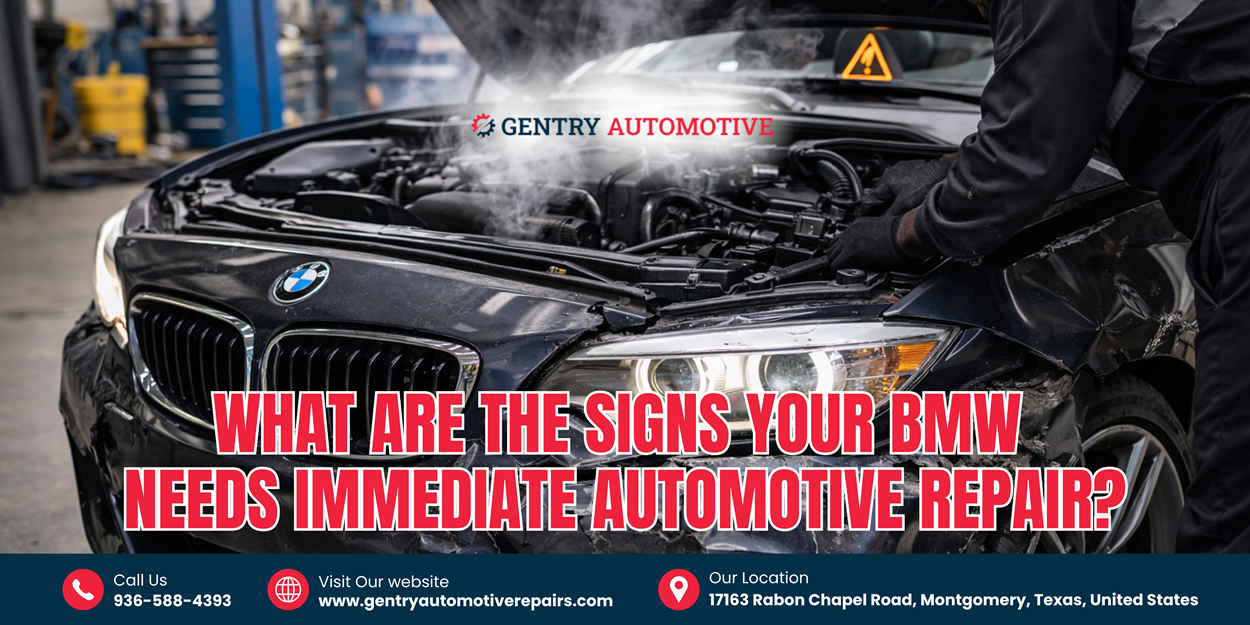
BMW vehicles are engineered for performance, precision, and driving comfort. But even a well-built luxury vehicle will show warning signs when something goes wrong. Ignoring these signals can turn a small issue into a very expensive repair. If you drive in Texas and rely on your car daily, recognizing early warning signs can save both time and money.
Here are some clear signs your BMW may need immediate attention from professionals who specialize in BMW auto repair.
Common BMW Problems That Require Immediate Repair
What Are the Most Common Signs a BMW Needs Repair?
Common signs that a BMW may need immediate repair include dashboard warning lights, engine overheating, unusual braking or suspension noises, fluid leaks, burning smells, vibrations, and noticeable changes in vehicle performance.
These symptoms can have different causes, so a professional inspection and diagnostic scan can help identify the underlying problem before it develops into more extensive mechanical damage.
Warning Lights on the Dashboard
The most immediate way your vehicle communicates is through its dashboard. Owners often distinguish between yellow and red alerts.
A yellow light suggests a service is needed soon, but a flashing red light (particularly for the check engine, oil pressure, or cooling system) is a “stop now” command. If your oil light flickers, your engine may be in need of lubrication.
The Danger of Overheating
Texas summers are notoriously brutal on cooling systems. BMW is known for using plastic components in its expansion tanks and water pumps, which can become brittle and crack over time.
If you notice a sweet, syrupy smell or see steam rising from the hood, your cooling system has likely failed. Driving even a few miles with an overheating engine can warp the cylinder head, turning a cooling hose replacement into a multi-thousand-dollar nightmare.
Unusual Noises and Handling
A high-performance machine should be smooth and quiet. If you begin to hear:
- Squealing or Grinding: This typically indicates worn brake pads or rotors that need immediate replacement to ensure stopping power.
- Clunking or Vibrations: Often a sign of failing suspension bushings or control arms, which can compromise your steering on the highway.
- Hissing: This usually points to a vacuum leak or a breached coolant line.
Fluid Leaks and Performance Drops
If you notice dark stains or puddles under your car, do not ignore them. BMW engines are known to develop oil leaks as gaskets age and harden from heat.
Oil, coolant, or transmission fluid leaks can lead to overheating or major mechanical failures if left unchecked. Drivers often notice burning smells or smoke when leaking oil touches hot engine parts. Getting the leak diagnosed early is critical to protect the engine and surrounding components.
When Should You Stop Driving a BMW and Get It Inspected?
A BMW should be stopped and inspected promptly when it shows signs such as engine overheating, low oil pressure, significant fluid loss, severe braking problems, smoke or steam, or a flashing warning light associated with a critical system.
Continuing to drive with these symptoms can increase the risk of mechanical damage or create a safety concern. When the cause is unclear, professional BMW diagnostics can determine whether the vehicle is safe to drive or requires immediate repair.
How Do You Know When Your BMW Needs Professional Repair?
Look for changes in warning lights, engine temperature, braking performance, steering, suspension, fluid levels, sounds, smells, and overall driving behavior. Even a symptom that appears minor can indicate a developing mechanical or electrical problem.
A professional BMW repair shop can inspect the vehicle, perform diagnostic testing, identify the underlying fault, and recommend the appropriate repair based on the vehicle’s symptoms and condition.
Wrapping Up
When these symptoms arise, searching for a BMW mechanic shop near me is the first step toward preserving your vehicle’s longevity. Delaying BMW automotive repair only leads to more expensive complications down the road. For drivers in the Montgomery, Texas area, Gentry Automotive provides the specialized expertise and diagnostic tools required to keep your luxury vehicle performing at its peak. So, schedule an inspection today!
Frequently Asked Questions
1. What are the warning signs that a BMW needs immediate repair?
Warning signs include overheating, flashing critical warning lights, unusual grinding or clunking noises, fluid leaks, burning smells, smoke, severe vibrations, and sudden changes in braking, steering, or engine performance.
2. Is it safe to drive a BMW with a warning light on?
It depends on the warning light and the vehicle’s symptoms. Some warnings indicate that service is needed soon, while critical warnings involving systems such as oil pressure, braking, or engine temperature may require stopping the vehicle and having it inspected promptly.
3. Why does a BMW overheat?
BMW overheating can result from problems with components in the cooling system, including the water pump, thermostat, radiator, hoses, or expansion tank. A coolant leak or cooling-system failure should be diagnosed promptly to reduce the risk of engine damage.
4. What causes unusual noises when driving a BMW?
Unusual noises can come from worn brake components, suspension parts, wheel bearings, belts, cooling-system components, or other mechanical issues. The type, location, and timing of the noise can help a technician determine the likely source.
5. How often should a BMW be inspected?
BMW inspection and maintenance intervals depend on the model, mileage, age, driving conditions, and manufacturer recommendations. Drivers should also have the vehicle inspected when they notice new warning lights, noises, leaks, handling changes, or performance problems.
6. Can I get BMW automotive repair services in Montgomery, Texas?
Yes. Gentry Automotive provides BMW automotive repair and diagnostic services for drivers in the Montgomery, Texas area. Professional inspection can help identify warning signs and determine the appropriate repair for the vehicle.