

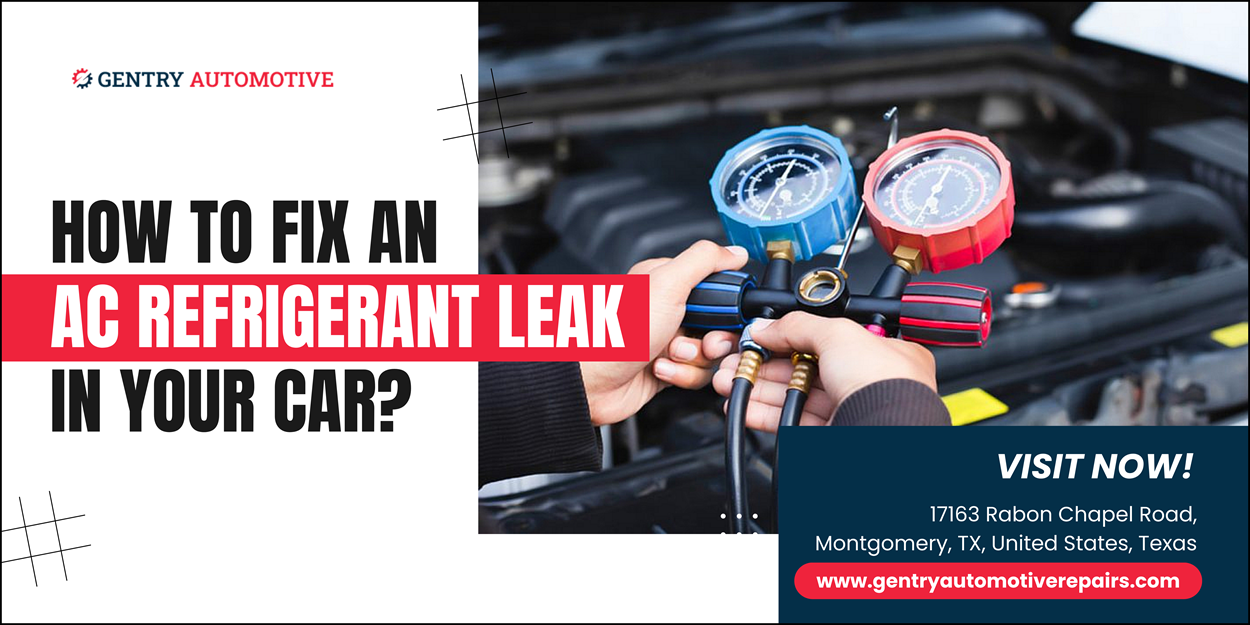
There’s nothing more miserable than sitting in a sweltering car with AC that only blows warm air. If your car’s cooling system isn’t performing, there’s a very real chance you’re dealing with an AC refrigerant leak in your car, and ignoring it doesn’t make it go away. This is a closed system, which means the refrigerant isn’t consumed like fuel. If it’s low, it leaked out somewhere.
By the end of this article, you’ll know how to approach it, including what you can reasonably try yourself and when to call in pros.
Signs Your Car Needs a Car AC Refrigerant Leak Repair
Your car’s AC system circulates refrigerant through hoses and components like the compressor and condenser to provide cool air. When there’s a leak, even tiny ones at hose connections, O-rings, or seals, the refrigerant escapes and the cooling ability collapses. Identifying and stopping the leak is the only way to fix it right.
DIY cans of refrigerant may temporarily cool your car, but they don’t fix the leak. They just fill a system that’s still losing coolant. Most folks who’ve tried this confirm it’s usually a band-Aid at best.
How to Diagnose a Car AC Refrigerant Leak
Before any repair can be done, you need to find where the refrigerant is leaking:
- Visual Inspection: Look for oily residue around hoses, connections, the compressor, or condenser. Refrigerant carries a bit of oil, so a greasy film often marks the culprit.
- UV Dye/Leak Detection: A tech can inject UV dye into the system and use a black light to watch for glowing spots where it leaks out.
- Electronic Leak Detector: This is a more precise tool that senses refrigerant escaping without relying on dyes.
Attempting to locate leaks without proper tools often leads to missed spots, and you don’t want to dump money into refrigerant only to watch it bleed out again.
Effective Repair Methods
Depending on where the leak is, here’s what a realistic repair looks like:
- Seals and O‑rings: These are common failure points. Replacing worn seals or O‑rings at hose connections can stop small leaks.
- Hose Replacement: Cracked hoses or corroded fittings must be swapped out because there’s no glue that’ll hold up under pressure.
- Component Replacement: Leaks from the condenser, evaporator, or compressor typically require swapping the part entirely. These are complex jobs and usually require professional help.
Avoid those “stop‑leak” additives sold at auto parts stores. Many experienced mechanics and car enthusiasts warn that they clog the system and can do more harm than good.
Recharge The System Properly
Once the leak is actually fixed, the system must be evacuated, vacuumed to remove air and moisture, and then recharged with the correct amount and type of car AC refrigerant. This requires specialized gauges and equipment. Guesswork here can overcharge the system, reduce cooling, or damage components.
When to Visit a Professional Car AC Repair Shop
If your leak is in hard‑to‑reach places like the evaporator or internal seals, don’t fight with it at home. AC systems are pressurized, potentially hazardous to health, and illegal to vent into the atmosphere if mishandled. It is smarter to take it to a real car AC repair shop.
In Montgomery, Texas, Gentry Automotive offers professional leak diagnostics and auto repair that stops the problem at the source.
Wrapping Up
A car AC refrigerant leak is the main reason your AC stops cooling effectively. Temporary DIY fixes may provide short-term relief, but the only lasting solution is identifying and repairing the leak properly. For reliable and safe repair, visiting a trusted expert guarantees the job is done right and your car stays comfortably cool.
FAQ
Q1. Is it safe to drive a car with a refrigerant leak?
Yes, it’s generally safe to drive, but the AC won’t cool properly. It’s best to avoid prolonged driving in extreme heat, as low refrigerant can also strain the compressor, leading to costly damage.
Q2. Are AC leaks worth replacing?
Absolutely, repairing an AC leak restores cooling efficiency, prevents system damage, and saves money long-term compared to repeated refrigerant refills or replacing major components.
Q3. Is an AC leak covered by Insurance?
Usually not, AC refrigerant leaks are considered maintenance issues, so standard auto insurance policies typically won’t cover the repair.