



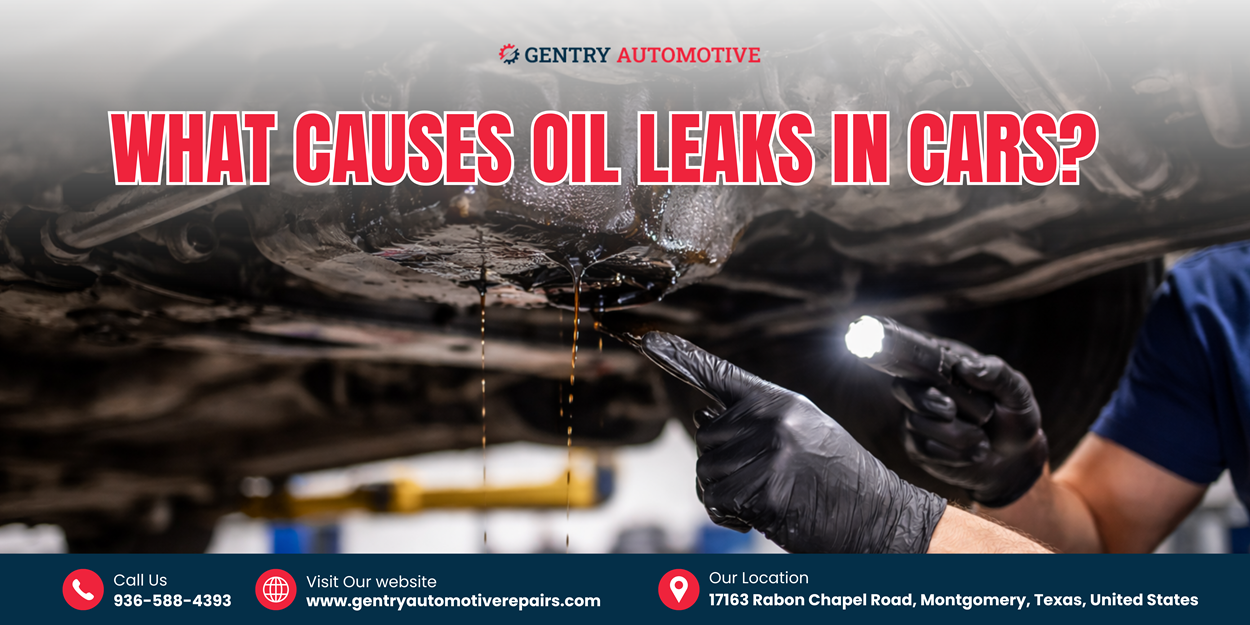
Finding a dark puddle under your car is an immediate stomach-drop moment for any driver. While some might dismiss a few drops as a sign of an old engine, the reality is that oil is the only thing standing between smooth operation and a seized motor.
So, if you’re seeing these dark spots, understanding what causes oil leaks is vital to preventing a massive repair bill down the line.
Why is Your Car Engine Leaking?
Most oil leaks aren’t caused by a single break but rather the slow failure of gaskets and seals. These components live in a brutal environment of extreme heat and constant vibration.
- Degraded Valve Cover Gaskets: This is the most common leak source. The gasket seals the top of the engine, and over 50,000 to 100,000 miles, the rubber becomes brittle and hard, allowing oil to weep onto the hot exhaust.
- Failed Oil Pan Gaskets: Positioned at the very bottom, these gaskets eventually succumb to the weight of the oil and road grime.
- Crankshaft Seals: These are much more serious. If your front or rear main seals fail, oil can spray onto your timing belt or contaminate your clutch, leading to even more expensive secondary failures.
Engine Oil Leak After Oil Change Service
It’s ironic, but an oil leak after an oil change is a frequent complaint. This usually boils down to three avoidable mistakes:
- The Double Gasket: If the old oil filter gasket sticks to the engine and the new filter is installed on top of it, the seal will fail under pressure, often resulting in a massive, sudden leak.
- Stripped Drain Plugs: Overtightening the plug can strip the threads of the oil pan, while undertightening or forgetting to replace the crush washer leads to a constant, annoying drip.
- Loose Filters: A filter that is not properly tightened in place can vibrate loose over a few hundred miles.
How Much Does an Oil Leak Repair Cost?
The oil leak repair cost is rarely about the price of the part. It’s more about the labor. A $20 rear main seal might take ten hours of labor to replace because the entire transmission has to be dropped. Conversely, a valve cover gasket is a relatively accessible fix. Ignoring a $200 leak today often leads to a $3,000 engine replacement tomorrow.
Wrapping Up
Knowing how to fix an oil leak depends on its severity. Start by cleaning the engine with a degreaser to pinpoint the highest point of the leak. Once identified, the faulty gasket or seal must be replaced to ensure a permanent fix. A professional repair, in cases like these, is non-negotiable.
For residents in Montgomery, Texas, who need an expert diagnosis and high-quality repair, Gentry Automotive Repairs offers the expertise required to pinpoint the exact source and get you back on the road safely.
FAQs
What are the most common causes of oil leaks in cars?
The most common causes include worn valve cover gaskets, damaged oil pan gaskets, failing crankshaft seals, and loose or improperly installed oil filters. At Gentry Automotive, technicians use advanced diagnostic tools to pinpoint the exact source of the leak and prevent further engine damage. Call now at (936) 588 4393!
Why is my car leaking oil after an oil change?
A loose oil filter, a double gasket, or a damaged drain plug washer often causes oil leaks after an oil change. These small installation errors can lead to significant leaks. Gentry Automotive ensures proper sealing and inspection to prevent post-service oil leaks. Contact us now!
Is it safe to drive with an oil leak in my car?
No, driving with an oil leak is risky. Low oil levels can cause overheating, increased friction, and severe engine damage. Even small leaks can worsen quickly, so it’s important to diagnose and fix the issue as soon as possible to avoid costly repairs.
How much does it cost to fix an oil leak in a car?
The cost varies depending on the source of the leak. Minor fixes like replacing a valve cover gasket are relatively affordable, while major repairs like a rear main seal can be expensive due to labor. Early detection helps reduce overall repair costs significantly.
How can I tell where my car is leaking oil from?
To identify the source, clean the engine with a degreaser and monitor where fresh oil appears. Common leak points include the valve cover, oil pan, and seals. You may also notice burning oil smells or visible drips under the vehicle.
When should I take my car to a mechanic for an oil leak?
You should visit a mechanic if the leak is persistent, worsening, or causing low oil levels, smoke, or engine warning lights. Professional inspection is necessary for hidden leaks or seal failures to prevent long-term engine damage.