
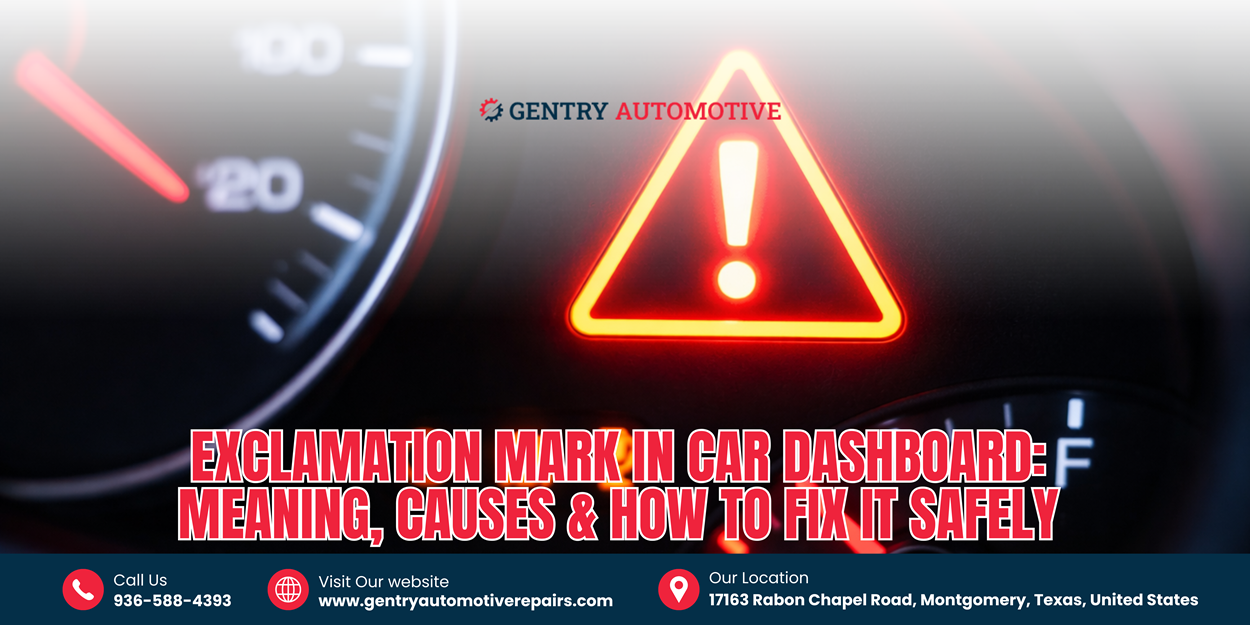
Seeing an exclamation mark on your car dashboard can be confusing, but ignoring it could lead to expensive repairs or unsafe driving conditions. This warning light can indicate several issues, including low tire pressure, brake system problems, traction control faults, or other important vehicle alerts. While some causes are simple to fix, others require immediate professional attention. In this guide, you’ll learn what each exclamation mark warning means, the most common causes, how to diagnose the problem, and when you should visit a trusted auto repair shop in Montgomery, TX.
In this guide, you’ll learn what each exclamation mark warning means, the most common causes, whether it’s safe to continue driving, how to diagnose the problem, and the steps you can take to fix it before it becomes an expensive repair.
Quick Answer
An exclamation mark on a car dashboard is a warning that one of your vehicle’s systems requires attention. The exact meaning depends on the surrounding symbol. A horseshoe-shaped icon indicates low tire pressure (TPMS), a circle with brackets usually points to a brake system problem, and a triangle with an exclamation mark is a master warning light. Yellow or orange lights usually allow cautious driving, while a red warning light requires immediate attention.
What Does an Exclamation Mark Mean on a Car Dashboard?
At its core, an exclamation mark is a warning that a specific system is operating outside of its normal parameters. However, the meaning changes depending on the color of the light and the icon surrounding the exclamation mark.
The Three Main Icons
- The Horseshoe Shape (!): If the exclamation mark is inside a symbol resembling a horseshoe with treads at the bottom, it is your TPMS (Tire Pressure Monitoring System) light. It means one or more of your tires are underinflated or overinflated.
- The Circle and Brackets (!): If the mark is inside a circle flanked by two brackets, this is the brake system warning. This is critical. It could mean your parking brake is engaged, your brake fluid is low, or there is a mechanical fault in the braking system.
- The Triangle (!): An exclamation mark inside a triangle is a general master warning. This is often accompanied by a text message on the digital display, indicating issues ranging from a blown light bulb to a faulty sensor.
The Color Code for the Exclamation Mark in a Car: Decoding the Urgency
Car manufacturers use a “traffic light” logic for dashboard warnings. Understanding the severity of the color is the first step in knowing whether you can drive to a shop or if you need to pull over immediately.
Yellow Exclamation Mark
A yellow light is a cautionary signal. It indicates that a system needs to be checked soon, but it is generally not an immediate emergency.
Common causes include low tire pressure due to a change in outside temperature, a minor sensor glitch, or a scheduled maintenance reminder.
You can usually continue driving to your destination, but you should inspect the vehicle as soon as you park.
Orange Exclamation Mark
An orange light sits in the middle ground but leans toward urgency. In many vehicles, orange and yellow are used interchangeably, but in others, orange signifies a system malfunction rather than just a low fluid level.
This could be the result of a failing ABS sensor, a steady drop in tire pressure that might indicate a slow leak, or a fault in the traction control system.
Do not ignore an orange light. Address it within the next 24 hours to prevent the issue from escalating into a more expensive repair.
The Red Exclamation Mark
Red is the color of danger. If you see a red exclamation mark, especially the one associated with the braking system, you must take it seriously. Some common causes are total loss of brake fluid, severe engine overheating, or a failure in the power steering system.
If the red brake light is on and your pedal feels “spongy” or goes to the floor, do not attempt to drive to a mechanic. Have the vehicle towed.
Common Causes Behind the Dashboard Warning Light
Fluctuating Tire Pressure
The most frequent culprit for the exclamation mark is the TPMS. Tires naturally lose about 1 PSI per month, and cold weather can cause the air inside to compress, triggering the light. However, if the light flashes and then stays solid, it usually means the sensor itself has failed.
Brake System Issues
If the exclamation mark appears in red or is surrounded by a circle, your brakes require literal help. This is often caused by:
- Low Brake Fluid: As your brake pads wear down, the fluid level in the reservoir drops. If it drops too low, the light triggers.
- Parking Brake Engaged: Sometimes, we forget to fully disengage the handbrake.
- ABS Malfunction: The Anti-lock Braking System uses sensors at each wheel; if one gets dirty or damaged, the light will illuminate.
Electronic Stability Control (ESC)
If you see the mark during a rainstorm or while driving on gravel, the car’s stability control is likely working to keep you from sliding. If the light stays on after the road conditions improve, the system has encountered an error.
How to Fix the Exclamation Mark Car Light?
Before you panic, there are several troubleshooting steps you can take to identify and potentially resolve the issue safely.
Step 1: Check the Basics
If the light is the TPMS (horseshoe) symbol:
- Pull into a gas station and check the pressure in all four tires using a gauge.
- Compare the numbers to the sticker inside your driver-side door jamb.
- Inflate to the recommended level. The light may take a few miles of driving to reset.
Step 2: Inspect the Brake Fluid
Pop the hood and locate the brake fluid reservoir (usually a translucent white plastic tank near the firewall on the driver’s side).
- If the fluid is below the “MIN” line, you have a leak or severely worn pads.
- Do not just top it off and ignore it. If the fluid is low, there is a reason, and it requires a professional inspection.
Step 3: The “Restart” Method
Occasionally, modern car computers experience a ghost error. If the light is yellow or orange, try turning the car off and back on. If the light disappears and stays off, it may have been a momentary sensor glitch. If it returns, the fault is real.
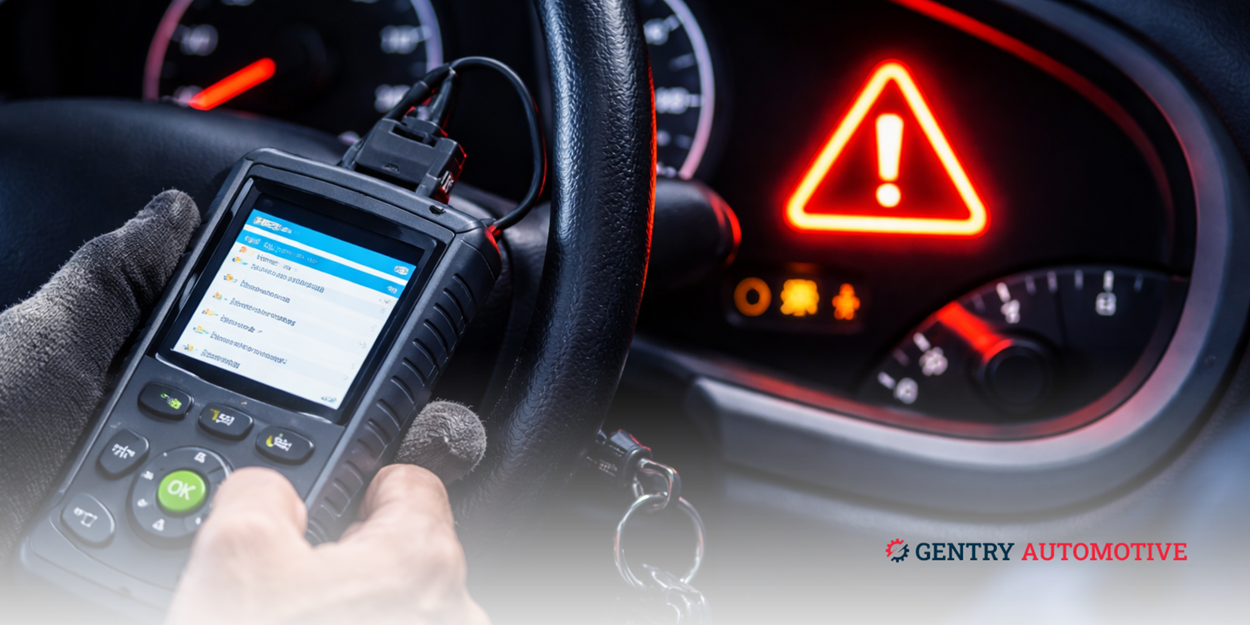
Step 4: Use an OBD-II Scanner
If you have a general master warning (the triangle), an OBD-II scanner can be plugged into the port under your dashboard. It will give you a specific code (e.g., P0300) that tells you exactly which sensor is unhappy.
Safety First: When to Stop Driving
There is a big difference between a check engine light and a system failure light. You should pull over immediately if:
- The exclamation mark is red.
- The light is flashing (this often indicates a severe engine misfire or critical failure).
- You notice a change in vehicle performance, such as shaking, loss of power, or a hard brake pedal.
Continuing to drive with a red brake warning light can lead to a total loss of stopping power, putting your life and others at risk.
Bottom Line
An exclamation mark warning light is your vehicle’s way of telling you that something needs attention before it turns into a costly repair. Whether the issue is related to tire pressure, the brake system, or another important safety feature, early diagnosis can save both time and money. If the warning light stays on or returns after resetting, it’s best to have your vehicle inspected by experienced technicians.
At Gentry Automotive in Montgomery, TX, we provide professional diagnostics and reliable repairs to identify the exact cause and restore your vehicle’s performance and safety.
For those looking for reliable Auto Repair in Montgomery, Tx, the team at Gentry Automotive provides comprehensive diagnostic services. Whether it’s a complex braking issue or a faulty TPMS sensor, their technicians have the tools to pinpoint the root cause and get you back on the road safely. Don’t let a small warning light turn into a major mechanical failure.
FAQ
What does an exclamation mark mean on a car dashboard?
An exclamation mark on a car dashboard is a warning indicator that a system needs attention. Its meaning depends on the symbol and color. It can indicate low tire pressure (TPMS), brake system issues, or a general system alert requiring inspection.
Is it safe to drive with an exclamation mark warning light on?
It depends on the color. A yellow or orange light usually means you can drive cautiously for a short distance, but a red exclamation mark signals a serious issue. In that case, you should stop driving immediately to avoid safety risks.
Why is my tire pressure light on even though my tires look fine?
The tire pressure light can turn on due to temperature changes, slow air leaks, or a faulty TPMS sensor. Even if tires appear normal, the pressure may be below recommended levels. Always check with a pressure gauge for accurate readings.
What does a triangle with an exclamation mark mean in a car?
A triangle with an exclamation mark is a master warning light. It indicates a general issue in the vehicle, often related to sensors or electronic systems. Usually, a message will appear on the dashboard display explaining the specific problem.
What should I do when the exclamation mark light comes on?
Start by checking tire pressure, brake fluid levels, and whether the parking brake is engaged. Restart the vehicle to rule out temporary errors. If the light stays on, use a diagnostic scanner or visit a professional mechanic for inspection.
When should I stop driving if I see an exclamation mark warning?
You should stop driving immediately if the light is red, flashing, or if you notice issues like weak brakes, strange noises, or loss of control. These signs indicate a serious problem that could affect vehicle safety.
Can low brake fluid cause the exclamation mark warning light?
Yes. Low brake fluid is one of the most common reasons the brake warning light appears. Since brake fluid is essential for proper braking performance, the issue should be inspected immediately.
Can cold weather turn on the tire pressure warning light?
Yes. Cold temperatures reduce tire pressure naturally, which can trigger the TPMS warning light. Always check tire pressure with a gauge instead of relying on visual inspection.
Will the exclamation mark warning light reset itself?
Some warning lights will turn off automatically after the issue has been corrected. Others require a manual reset or a diagnostic scan after repairs are completed.
Can I ignore a yellow exclamation mark?
Although a yellow warning is usually less serious than a red one, it should never be ignored. Driving for an extended period without diagnosing the problem may lead to more expensive repairs.