



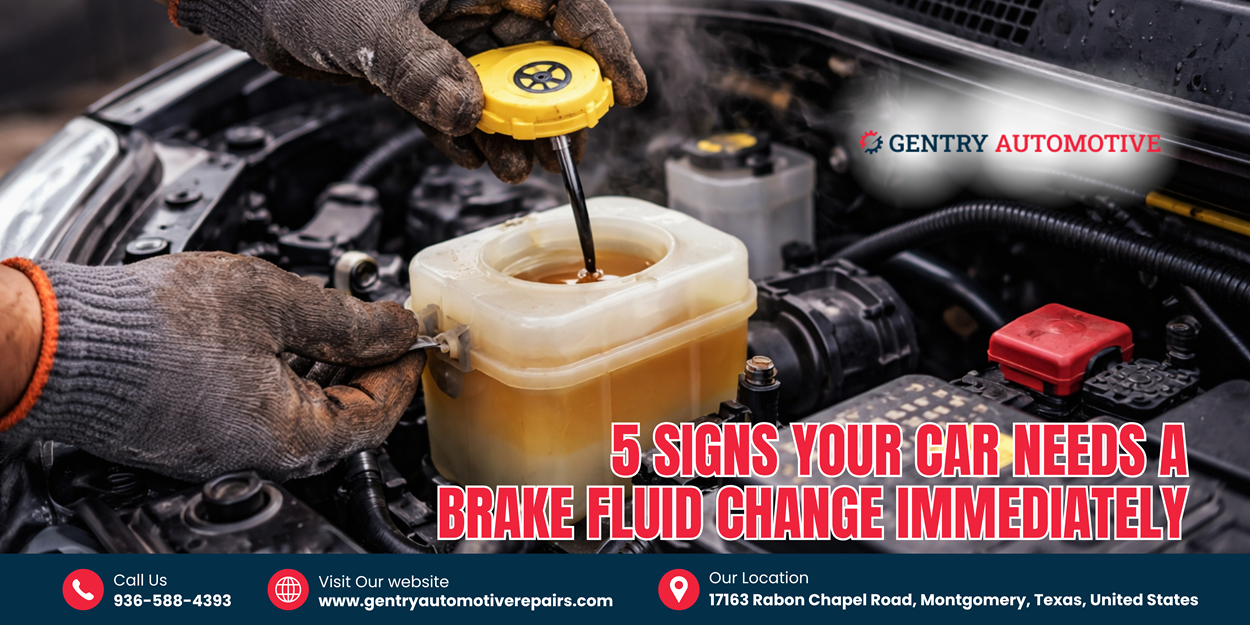
Brake fluid is one of those critical car fluids your vehicle cannot function without. It transfers the force you apply on the pedal into the hydraulic pressure that actually stops your car. Unfortunately, because brake fluid is hygroscopic (it absorbs moisture over time), it degrades and loses effectiveness, even if you’ve barely driven your car. Ignoring this can cost you far more than the brake fluid change cost later on.
Here are 5 unmistakable signs it’s time for a brake fluid check and likely a change now:
Common Symptoms That Signal You Need a Brake Fluid Change
1. Spongy or Soft Brake Pedal
If your brake pedal feels like you’re stepping on a marshmallow, you likely have air or moisture in your lines. Because brake oil in car systems is non-compressible, any contamination allows the pedal to travel further toward the floor, dangerously increasing your stopping distance.
2. The ABS Light Stays On
Modern vehicles are equipped with sensors that monitor the health of your braking system. If your dashboard illuminates the ABS (Anti-lock Braking System) light, it often signals that the fluid level is low or the fluid is too dirty to maintain proper pressure.
3. Discoloured or Dirty Fluid
Fresh fluid should be nearly clear with a slight yellow tint. If you check your reservoir and see a dark colour resembling iced tea or floating debris, the fluid has degraded. Contaminated fluid can damage your callipers and master cylinder, significantly increasing your eventual brake fluid change cost.
4. Strange Noises or Burning Smells
Grinding or squealing isn’t always the pads. If the fluid can’t lubricate the system properly, components can overheat. A sharp, chemical burning smell after heavy braking is a sign that your brake fluid has reached its boiling point and is no longer effective.
5. Puddles Under the Vehicle
A visible leak is an emergency. If you see a slick, clear-to-brown liquid pooling near your wheels, you need to fix the brake fluid leak immediately. Operating a vehicle with a leak is a formula for total brake failure.
Wrapping Up
In most cars, checking and changing fluid every couple of years is sound preventative maintenance. If you’re unsure how to change brake fluid, or you spot any of these symptoms, don’t delay. Let a qualified shop inspect and fix the issue promptly. After all, you don’t want to learn the hard way.
If you’re in Montgomery, Texas and need dependable service to diagnose, fix a brake fluid leak, or perform a proper brake fluid change, Gentry Automotive Repairs has you covered. Book your car safety inspection today!
Frequently Asked Questions About Brake Fluid Changes
1. How often should brake fluid be changed?
Brake fluid is commonly recommended for replacement every 2–3 years, but the exact interval depends on your vehicle manufacturer’s guidelines, driving conditions, and the condition of the fluid.
2. What are the signs that brake fluid needs to be changed?
Common signs include a soft or spongy brake pedal, dark or contaminated fluid, an illuminated brake or ABS warning light, reduced braking performance, and signs of a brake fluid leak.
3. Can old brake fluid affect braking performance?
Yes. Brake fluid absorbs moisture over time, which can lower its boiling point and reduce braking performance, particularly during repeated or heavy braking.
4. Can I drive with dirty or low brake fluid?
It’s best not to ignore low or contaminated brake fluid. Low fluid may indicate a leak or worn brake components, while contaminated fluid can affect the hydraulic braking system. Have the vehicle inspected as soon as possible.
5. How much does a brake fluid change cost?
The cost varies depending on the vehicle, the type of brake fluid required, and whether additional brake-system repairs are needed. A professional inspection can provide an accurate estimate.
6. Where can I get a brake fluid change in Montgomery, Texas?
If you’re in Montgomery, Texas, Gentry Automotive can inspect your brake system, diagnose potential brake fluid issues, repair leaks, and perform a professional brake fluid change to help keep your vehicle safe.