



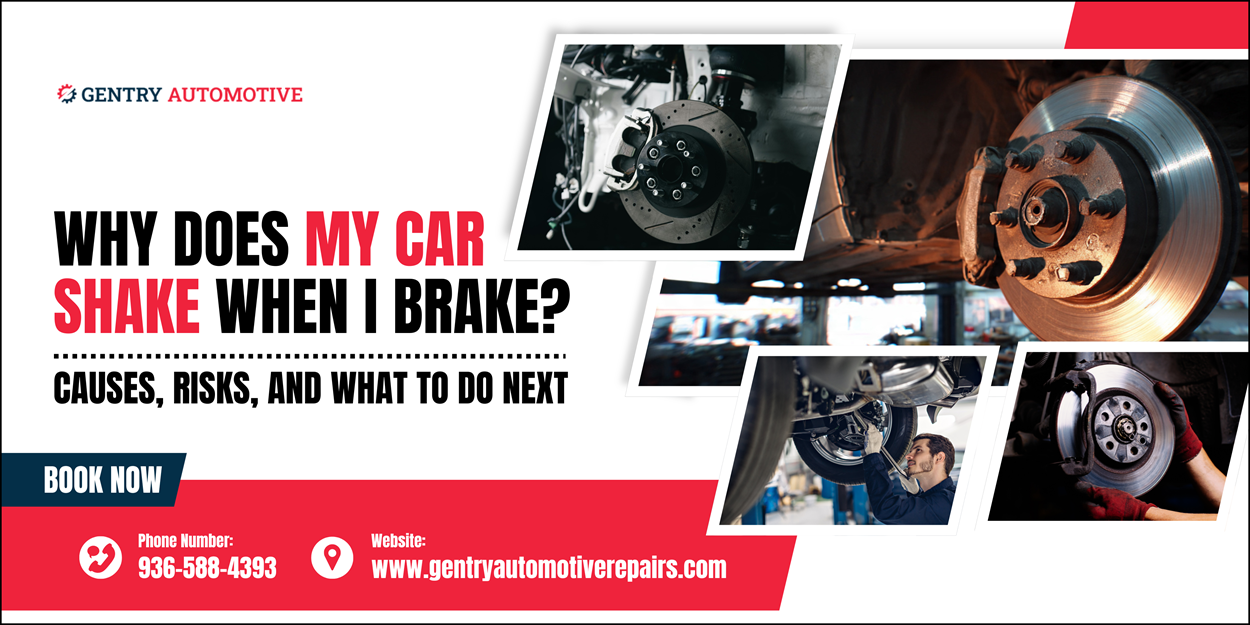
Imagine you’re driving like normal and everything feels fine. Then you hit the brakes, and suddenly the steering wheel starts shaking, the pedal feels weird, and your anxiety peaks instantly. That said, if you’ve ever thought, “Why does my car shake when I brake?”, you’re not alone. This is one of the most common brake-related complaints drivers have, and no, it’s not something you should ignore or “get used to.”
To clear things up, your car should never be shaking when you hit the brakes. That shaking is your vehicle telling you something is wrong. And while the internet loves vague answers, you’ll find answers in plain language about what causes it, how serious it is, and what you should actually do next.
The Most Common Reason Your Car Shakes When You Brake
Warped or Damaged Brake Rotors
Usually, if your car shakes when you brake, the number one culprit they’re eventually pointed to is the rotors.
Rotors are the metal discs your brake pads clamp down on to slow the car. For brakes to work smoothly, these discs need to be perfectly flat and even. But over time, they don’t stay that way. Here’s what happens:
- Heat from braking builds up over and over.
- That heat causes the metal to lose its shape, creating thin and thick spots on the rotor surface.
- These uneven surfaces cause inconsistent contact with the brake pads.
- Every time the pad hits a high or low spot, it creates a vibration that is felt through your pedal, steering wheel, or whole car.
This is why your car can feel fine until you press the brake pedal. The shaking only happens when the rotor contact is supposed to be smooth. A warped rotor doesn’t make smooth contact. If your brake rotor surface is uneven, your car will shake when braking. This is one of the most reliable diagnoses you can make.
Worn or Uneven Brake Pads
Your brake pads are the parts that press on the rotors to slow you down. They wear out naturally as you drive, but when they wear too far or unevenly, the surface that contacts the rotor isn’t smooth anymore. Bad pads can cause:
- Pulsation or vibration when braking
- Steadier shaking at higher speeds
- Harsh braking during normal stops
Worn pads can also accelerate rotor wear, turning one fix into two problems if ignored. So, if you hear squealing or grinding before the shaking starts, that’s often a clear sign the pads are too worn.
Wheel and Tire Problems
Sometimes people experience shaking and assume it must be just a brake problem, but that’s not always true. One reason could be unbalanced wheels, where the tire and wheel assembly doesn’t have even weight distribution. This can start showing symptoms when you brake because braking shifts the weight of the car forward. When that weight shift hits a wheel that’s out of balance, it amplifies vibration.
Additionally, misaligned wheels or uneven tire wear can make braking vibrations seem worse. These issues often show up at speed, even without braking, but braking makes them much more noticeable because of the physics involved.
In some cases, bent rims or damaged tire structure can also introduce vibration that feels like a brake problem. Drivers confirm that bent wheels or hub issues can continue causing shaking even after brake components have been replaced.
Suspension, Bearings & Steering Components
Your car’s suspension and steering systems play a massive role in how stable your vehicle feels. Here are some components outside the braking system that can cause shaking:
- Worn ball joints
- Damaged control arm bushings
- Loose wheel bearings
- Tie rod ends with excessive play
When these parts don’t hold the wheel assembly firmly, the forces of braking have nowhere stable to go and you feel it as shaking. People described persistent shaking even after replacing rotors and pads, only to find suspension or hub issues were part of the cause.
Sticking Calipers and Brake Hardware Problems
The brake calipers “squeeze” the pads against the rotor. If they don’t release cleanly or slide properly, they can apply uneven pressure even when you’re just decelerating.
Things that can go wrong:
- Stuck or seized calipers
- Corroded guide pins
- Collapsed brake hoses
These issues can cause uneven braking pressure and vibration. A few drivers frequently mention sticky caliper behavior as a cause of ongoing shaking, even after brake pad and rotor replacement.
What If the Brake Light on Your Car Turns On Too?
Now let’s talk about the brake light on car dashboards, because this matters. If your car is shaking and the brake warning light comes on, that’s not random. The brake light can indicate:
- Low brake fluid
- Excessively worn brake pads
- ABS faults
- Sensor issues
This light is not decorative. It exists to tell you that braking performance may be compromised. When combined with shaking, it’s a clear sign the system needs immediate attention. Driving around hoping it turns off is how small problems become expensive ones.
Is It Safe to Keep Driving If My Car Shakes When I Brake?

Even the slightest shaking in your car is a safety concern.
Driving with brake-related shaking means:
- Reduced stopping power
- Longer stopping distances
- Uneven brake wear
- Increased risk in emergency braking situations
Your brakes are the only thing standing between you and the object in front of you.
What You Should Actually Do Next
Instead of panicking or Googling endlessly, here’s the smart approach:
Check Your Brake Pads & Rotors
If they’re worn or warped, you will feel vibration when braking. And, continued use makes it worse. Most professional shops will inspect rotor thickness and pad wear first.
Inspect Wheels & Tires
Balance, alignment, tire wear patterns, and wheel condition can either cause the problem or mimic it.
Suspension & Bearings
If brakes are fine, vibration often comes from suspension, steering, or hub play. Have these checked thoroughly.
Brake System Hardware
Ensure calipers, guide pins, and brake hoses are in good shape. They’re just as critical.
Pay Attention to the Brake Light on the Car
A warning light may point to related systems like ABS. Don’t ignore it just because the shaking seems minor.
Wrapping Up
When you ask, “Why does my car shake when I brake?” the answer isn’t always a single component. It could be anything like wheel balance, suspension wear, and hardware problems. Your braking system is one of the most critical safety systems on your vehicle. If it’s vibrating, pulsing, or otherwise not smooth, treat it as urgent.
Whether it’s a rotor that needs resurfacing, brake pads that need replacing, or deeper suspension problems, the sooner you act, the safer you’ll be. If you’re in Montgomery, TX, and your car is shaking when you brake, getting a professional brake inspection, such as a brake repair from experts like Gentry Automotive, can stop the shaking and protect you on the road.
FAQ
Q1. How often should I change my brakes?
Most brake pads need replacement every 30,000–70,000 miles, depending on driving habits, vehicle type, and road conditions.
Q2. How long do brakes last on a car?
Brake pads typically last 3-5 years, while rotors can last longer if maintained and replaced when worn.
Q3. Do most cars have brake hold?
No, brake hold is common in newer vehicles but is not standard on all cars, especially older or basic models.
Q4. Where is the brake in a car?
The brake pedal is located on the left side of the footwell, between the clutch (if manual) and the accelerator.