

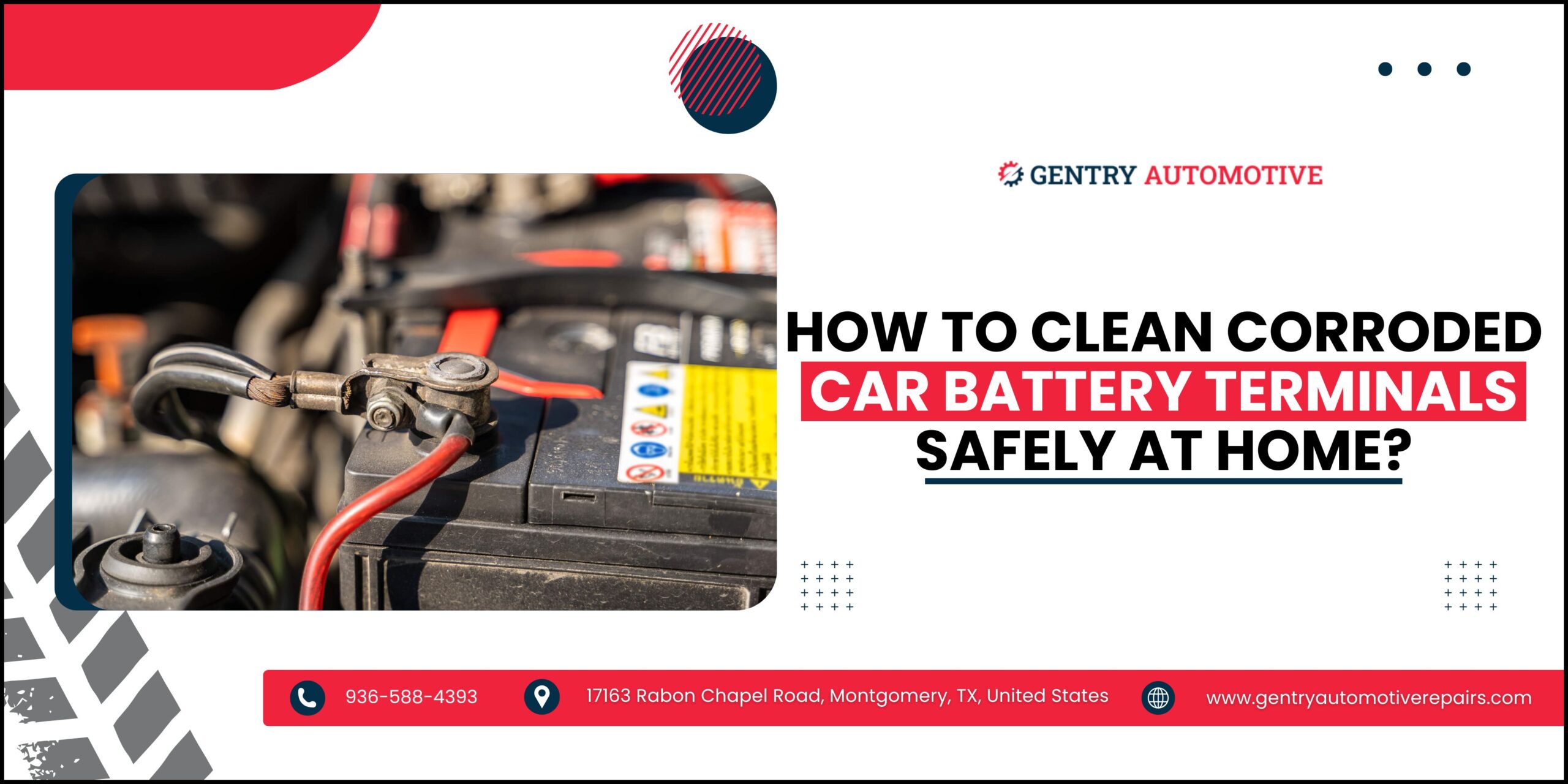
Is your car struggling to start lately? It’s time to pop the hood. If you see any white, green, or bluish crusty buildup around the battery terminals, it is a matter of concern. Because that chalky mess around the battery is corrosion. While it might look harmless, it can mess with your car’s performance quickly.
It is a common issue, and the good news is that you can fix it with the right techniques. In this blog, we’ll discuss how to clean car battery terminals at home, why it happens in the first place, and what you can do to prevent it from coming back.
Why Do Car Battery Terminals Get Corroded?
Before you begin cleaning anything, it helps to know why this mess is forming in the first place. Battery terminal corrosion usually happens due to one of three main reasons:
- Electrolyte leakage from the battery
- Chemical reaction between the battery acid and the metal terminals
- Overcharging or undercharging the battery
Any one reason could result in corrosion that blocks proper electrical contact, leading to poor starting power, dim headlights, and eventually a completely dead car.
Tools You’ll Need To Clean Car Battery Terminals
You need to have some basic tools and follow all the safety precautions when doing it yourself. Sure, you’re not dealing with full-strength acid, just the dried-out crust it leaves behind, but you still want to protect your eyes and hands. Here’s your basic toolkit:
- Safety Gloves and Safety Goggles
- Old Toothbrush or Wire Brush
- Wrench (usually 10mm)
- Baking Soda
- Warm Water
- Paper Towels or Clean Cloth
- Petroleum Jelly or Dielectric Grease (optional, but helpful)
- Battery Terminal Cleaner Spray (optional, for deep corrosion)
Step-by-Step: How to Clean Car Battery Terminals at Home
1. Turn Off the Car and Disconnect the Battery
Turn off your engine and take out the car keys. Pop the hood. Start by disconnecting the negative (–) terminal first. This is important. If your wrench accidentally touches metal while removing the positive terminal, and the negative is still connected, you could cause a spark or short circuit. Once the negative is off, go ahead and disconnect the positive (+).
2. Make a DIY Cleaner or Use a Spray
The easiest and safest way to clean battery corrosion is with a baking soda paste. Just mix a tablespoon of baking soda with a cup of warm water. Stir until it has the consistency of a pancake batter. This works because baking soda is alkaline, and it neutralizes the acidic corrosion instantly.
If you’re using a store-bought battery terminal cleaner spray, follow the label instructions. These are fast-acting and great, but not strictly necessary.
3. Scrub the Terminals
Dip your toothbrush into the baking soda mix and scrub directly onto the corroded terminals and posts. The mixture will fizz when it contacts the corrosion, which is a good sign. That’s the acid reacting with the baking soda. Keep scrubbing until you see clean metal underneath.
If the corrosion is really thick, then we would suggest pouring hot or even boiling water directly onto the terminals first to soften things up. This works really well, and you can do that before scrubbing.
4. Rinse Thoroughly and Dry
Once the terminals look clean, wipe everything down with a damp cloth to remove leftover baking soda and corrosion particles. Then dry everything completely using any clean cloth or paper towels.
5. Apply Grease or Jelly to Prevent Future Corrosion
This step is crucial, and most people skip it. Once dry, smear a small amount of petroleum jelly or dielectric grease on the battery posts and inside the cable clamps. This acts as a barrier that blocks moisture and acid vapors from causing more corrosion. Some people like to use spray-on terminal protectors, too. Use whatever works for you, just don’t skip this step.
6. Reconnect the Battery
Reconnect the positive (+) terminal first, then the negative (–). Tighten both clamps firmly, but don’t overdo it.
7. Start the Car and Check for Issues
Now, fire up the engine. If everything feels smoother or starts quicker, you did it right. You just saved your battery, extended its life, and probably prevented a bunch of trips to the mechanic.

Common Mistakes to Avoid When Cleaning a Corroded Car Battery
- Skip the cola trick: You’ve probably seen those viral reels or hacks where people pour soda on battery terminals. Yes, it might work and come in handy during emergencies, but soda leaves sticky residue, attracts bugs, and doesn’t neutralize acid properly.
- Avoid Cleaning without Gloves: Battery corrosion is acidic and can irritate your skin or eyes. Make sure to use gloves and goggles.
- Never clean with the engine running: This is extremely dangerous, and you could short the system or even start a fire.
- Always check for leaks or swelling: If your battery is bulging or leaking fluid, cleaning the terminals won’t help. That battery needs to be replaced immediately.
How Often Should You Clean Battery Terminals?
Every 6-12 months is a good rule of thumb. But clean them right away if you notice signs like:
- The car is struggling to start
- Dim headlights
- Clicking noise instead of cranking
- Visible white or green powder on the terminals
A little prevention goes a long way toward avoiding a dead car in the middle of nowhere.
When You Should Let a Mechanic Handle Battery Corrosion
If the corrosion looks extreme, the terminals feel loose, or you’re just not confident about what you’re doing, it’s totally okay to step back. Visit your nearest trusted automotive repair shop to get your battery inspected and to make sure there’s no underlying damage. Sometimes letting an expert handle it is the smarter move, especially when acid or electrical issues are involved.
Final Thoughts
Car battery terminal corrosion might look harmless, but it can quietly kill your car’s performance. Cleaning it the right way and regularly can save you from dead starts, electrical issues, and unnecessary repairs.
Whether you’re scrubbing it yourself with baking soda and a brush or handing it off to a trusted automotive repair shop when things look too far gone, the key is simple: do something before it turns into a breakdown.
Frequently Asked Questions (FAQ)
How do you clean corroded car battery terminals safely at home?
To clean corroded battery terminals, disconnect the battery (negative first), apply a baking soda and water solution, and scrub with a brush until corrosion is removed. Rinse, dry, and apply protective grease. For safe and thorough service, Gentry Automotive can handle battery cleaning and inspection professionally. Contact us now!
What is the best way to remove battery corrosion from terminals?
The best method is using a baking soda solution because it neutralizes acidic corrosion effectively. Scrub gently with a toothbrush or wire brush, rinse thoroughly, and dry completely. If corrosion is severe or keeps returning, Gentry Automotive can diagnose underlying battery or charging system issues. Call now at (936) 588 4393
Why do car battery terminals get corroded?
Battery terminals corrode due to chemical reactions between battery acid and metal, electrolyte leaks, or improper charging. This buildup blocks electrical flow, leading to starting issues, dim lights, and reduced battery performance if not cleaned regularly.
Can battery corrosion cause my car not to start?
Yes, corrosion can interrupt the electrical connection between the battery and the vehicle. This prevents proper current flow, causing slow cranking, clicking sounds, or a complete no-start condition. Cleaning the terminals often restores proper electrical contact.
How often should you clean car battery terminals?
You should clean battery terminals every 6 to 12 months or sooner if you notice white or green buildup, slow engine starts, or dim headlights. Regular maintenance helps extend battery life and prevents unexpected breakdowns.
When should I go to a mechanic for battery corrosion issues?
You should visit a mechanic if corrosion returns quickly, the battery is leaking or swollen, or cleaning doesn’t fix starting issues. These signs may indicate deeper problems like a failing battery or charging system that require professional diagnosis.