
If you own a Ford, whether it’s an Explorer, Edge, or an older variant, you want one thing: a car that starts, runs, and doesn’t cost your life savings to keep on the road. Cars don’t get fixed by wishful thinking. They get fixed by clear diagnostics, proper maintenance, and mechanics who don’t overcharge for basic problems.
Below you will find a guide to the most common Ford problems, how to spot them early, and how to decide whether to DIY or take it to a real shop. Let’s get started.
Essential Ford Service Schedule You Should Never Skip
The cheapest way to avoid massive repair bills is to do boring maintenance on schedule. Oil changes, brake inspections, and fluid checks are like insurance:
- Oil Change: Follow your owner’s manual and the manufacturer’s schedule. Modern Fords often recommend longer intervals than the old 3,000-mile rule, but this depends on your model and driving conditions. City stop-and-go, towing, or lots of short trips require more frequent changes.
- Filters, Belts, and Fluids: Replace air and cabin filters, inspect drive belts, and change coolant and transmission fluid per schedule. These small things prevent bigger failures, which are just plain expensive.
Signs Your Ford Needs Urgent Brake Repair
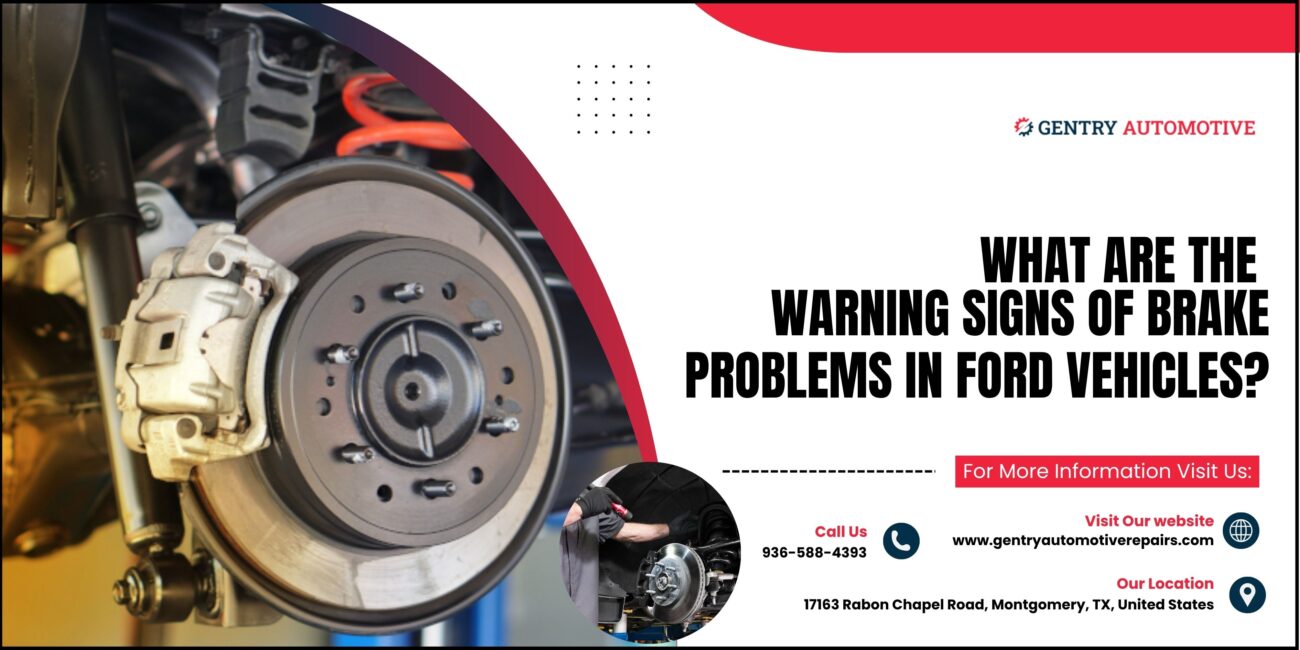
Brakes don’t inform you when they’re failing. So, if you notice any of the following, get a brake inspection immediately:
- Squealing or grinding noise when braking.
- A soft or “squishy” brake pedal.
- Vibration or shudder through the steering wheel under braking.
- The brake warning light is turned on on the dashboard.
Ignoring these will convert a cheap brake-pad replacement into rotor machining or full caliper replacement. Don’t be that person.
Common Ford Transmission Problems and How to Spot Them
Transmission problems are the ones that turn a daily driver into a tow truck bill. Symptoms to watch for:
- Hesitation or delayed engagement when shifting.
- Harsh or rough shifts between gears.
- Transmission slipping (engine revs but acceleration lags).
- Transmission fluid leaks or a burning smell.
Certain Ford models have had notable transmission complaints reported by owners. When the transmission acts up, don’t assume a quick fluid top-off will save you. Diagnostics (codes, mechatronic checks, pressure tests) are essential. If the shop only wants to sell you a “flush” without reading codes, walk away.
Ford AC System Issues and What They Mean
Air conditioning failure is a difficult situation. Weak airflow, warm air from the vents, or inconsistent cooling point to common issues like low refrigerant (from leaks), a failing compressor, clogged cabin filters, or electrical/control module faults. The Ford Explorer’s AC system is no different, and if you live in Texas, you’ll feel every ignored AC problem the first week of summer. Diagnosing early is the key. Pressure readings and a leak test will save money compared to replacing major components unnecessarily.
Engine Troubles in Ford Vehicles You Should Never Ignore
Modern Ford engines (yes, even EcoBoost variants) can be great until coolant leaks, turbo issues, or sensor failures are left alone. Warning signs include:
- Recurrent overheating or low coolant.
- Persistent check-engine light.
- Rough idle, misfires, or sudden loss of power.
- Oil consumption increases between changes.
If you see metal in the oil or notice loud rod/tapping sounds, pull the car off the road and tow it.
DIY Ford Repairs vs Professional Help: What’s Safe and What Isn’t
Yes, you can and should do basic maintenance such as oil changes, filters, wipers, light bulbs, and even pads if you’re competent. But be realistic:
Do-it-Yourself (Safe and Smart):
- Oil and filter changes (if you know the correct oil specifications).
- Air and cabin filter replacement.
- Brake pad swaps if you’ve done them before and have a torque wrench.
- Simple diagnostics with an OBD-II reader to gather codes.
Take Professional Help If:
- Transmission diagnostics and major repairs.
- Complex engine work (head gasket, timing chain/belt jobs).
- AC system refrigerant recovery and compressor replacement.
- Any repair requiring specialized calibration or software updates.
How to Choose the Best Ford Auto Repair Shop
You’ll find plenty of “we fix anything” shops. Here’s a checklist that separates pros from posers:
- Clear, written estimate with parts and labor separated.
- Willingness to show diagnostic trouble codes and explain them.
- Warranty on parts and labor (30-90 days minimum).
- Certified technicians or experienced Ford specialists.
- No pressure to replace parts before a proper diagnosis.
Which Auto Repairs to Prioritize First
Not all problems are emergencies. Prioritize by safety and escalation risk:
- Safety-critical (brakes, steering, airbags) need fixing promptly.
- Drivability and transmission issues can be fixed soon, but they can become dangerous or very costly.
- Comfort/housekeeping (AC, infotainment) allows you to schedule a repair.
Ask the shop for a “fail-safe” plan. What to fix now, what to monitor, and what will get worse if ignored. This helps you budget and avoid surprise invoices.
Recalls and Extended-Warranty Checks
Manufacturers sometimes issue recalls or technical service bulletins (TSBs) that cover certain failures. It’s worth checking recalls for your VIN. It’s free and could save you thousands. If a repair seems common across a model year, ask the shop whether a TSB or campaign exists. Don’t take “we don’t do recalls” as an acceptable answer.
Final Thoughts
There’s money to be saved and money to be wasted in auto repair. Protect yourself by doing basic maintenance, spotting the warning signs described here, and choosing a shop that explains what they’re doing, not one that hides behind vague phrases. When it’s time to hand over the keys in Montgomery, Texas, Gentry Automotive is an example of a local shop that offers Ford oil changes, brake work, AC service, transmission diagnostics, and engine repairs. They will give you the straight answers rather than a sales pitch.
Fix problems early, ask for diagnostics, and demand written estimates. Always remember: a good mechanic saves you money and a bad one costs you more than the repair.